Whale watching from Tenerife can be a very good half-day, but it is a poor place to demand a film scene on command. You are going out on the Atlantic, with wind, motion, changing light and animals that have not agreed to the schedule. Choose the trip for the time at sea and the possibility of an encounter, then anything more feels earned rather than owed.
Decide what you actually want from the outing
Start by separating three different wishes that often get bundled together: seeing marine wildlife, having a boat ride, and finding a family activity that fills a morning. They overlap, but they are not the same. A person who loves being on deck may enjoy a quiet stretch of sea even if sightings are distant. A person who gets anxious with motion may be happier viewing the coast from land and spending the time on a beach.
Trips from Costa Adeje and nearby south-coast harbours are convenient for many visitors, but convenience should not be the only criterion. Think about your group’s tolerance for heat, wind and sitting still. A toddler who enjoys a harbour for fifteen minutes may not enjoy a longer open-water journey. A teenager who wants photographs may find that the best moments happen quickly and do not look dramatic on a phone screen.
For some travellers, whale watching is a must do Tenerife experience. For others, it is simply an appealing option on a day when the sea is calm. Both positions are sensible. The useful question is whether the trip fits the people you are travelling with, not whether an internet list has ranked it above a viewpoint or a beach.
Choose a departure time by the sea, not by breakfast
Morning departures often appeal because the day is cooler and everyone has more patience. They can be a good choice, yet the best time is not fixed by a generic rule. Sea conditions, wind direction and the day’s forecast deserve a look before you commit. Ask at the harbour what the water has been doing and what the crew expects, then listen to the answer even if it does not support your preferred timetable.
A later trip may suit people who dislike an early start, but it can also mean more heat on deck and a tired group after lunch. Conversely, an early boat can leave a long afternoon for a beach or pool, though only if nobody needs a recovery nap after the motion. Leave space around the departure rather than arranging a restaurant booking or a long drive immediately before it.
| Trip shape | Works well for | Watch for |
|---|---|---|
| Shorter coastal outing | Families, first-time boat passengers and people with a limited attention span | Less time at sea means less room for the day to develop |
| Longer wildlife-focused trip | Visitors who genuinely enjoy boats and can handle movement | Heat, fatigue and motion sickness can take over the experience |
| Morning departure | Groups that want the afternoon free and cooler deck time | Early transport, breakfast timing and a sleepy start |
| Afternoon departure | Slow starters or people staying close to the harbour | Wind, stronger sun and pressure to fit dinner around the return |
Departure harbour matters more than people expect. Leaving from a marina close to your accommodation removes one source of stress and makes it easier to arrive early enough to use the toilet, apply sun protection and settle any tickets without running. A harbour farther away may offer a different boat style or schedule, but weigh that against the return drive. Nobody enjoys a winding road while feeling seasick.
Plan for movement, sun and the unglamorous parts
The sea is not a steady viewing platform. Even on a comfortable day, a boat rises, dips and changes direction. If you are prone to motion sickness, deal with it before boarding rather than waiting for the first green face in the family. Eat something light, avoid a heavy fried breakfast, stay where you can see the horizon, and take any usual remedy in line with its instructions. Crew members have seen every version of optimism followed by regret.
Choose clothing for wind and spray rather than for a resort promenade. A light layer can be useful even when the shore is hot, and a secure hat is better than one that becomes somebody else’s problem in the sea. Sunglasses help with glare, but keep a strap or case for them when you are moving around. Phones should be protected from spray and held with a proper grip; leaning out for a close image is a fast way to lose one.
Shade is another detail that gets overlooked. Some boats have covered areas, some have limited cover, and the pleasant seat at departure may be exposed once the sun changes angle. Ask where to sit if you need cover, but do not expect a crew member to reorganise a full deck around one person’s preferred photograph. Water, sunscreen and a realistic tolerance for being a little windswept will improve the trip more than any elaborate packing list.
Read wildlife claims with a sceptical but open mind
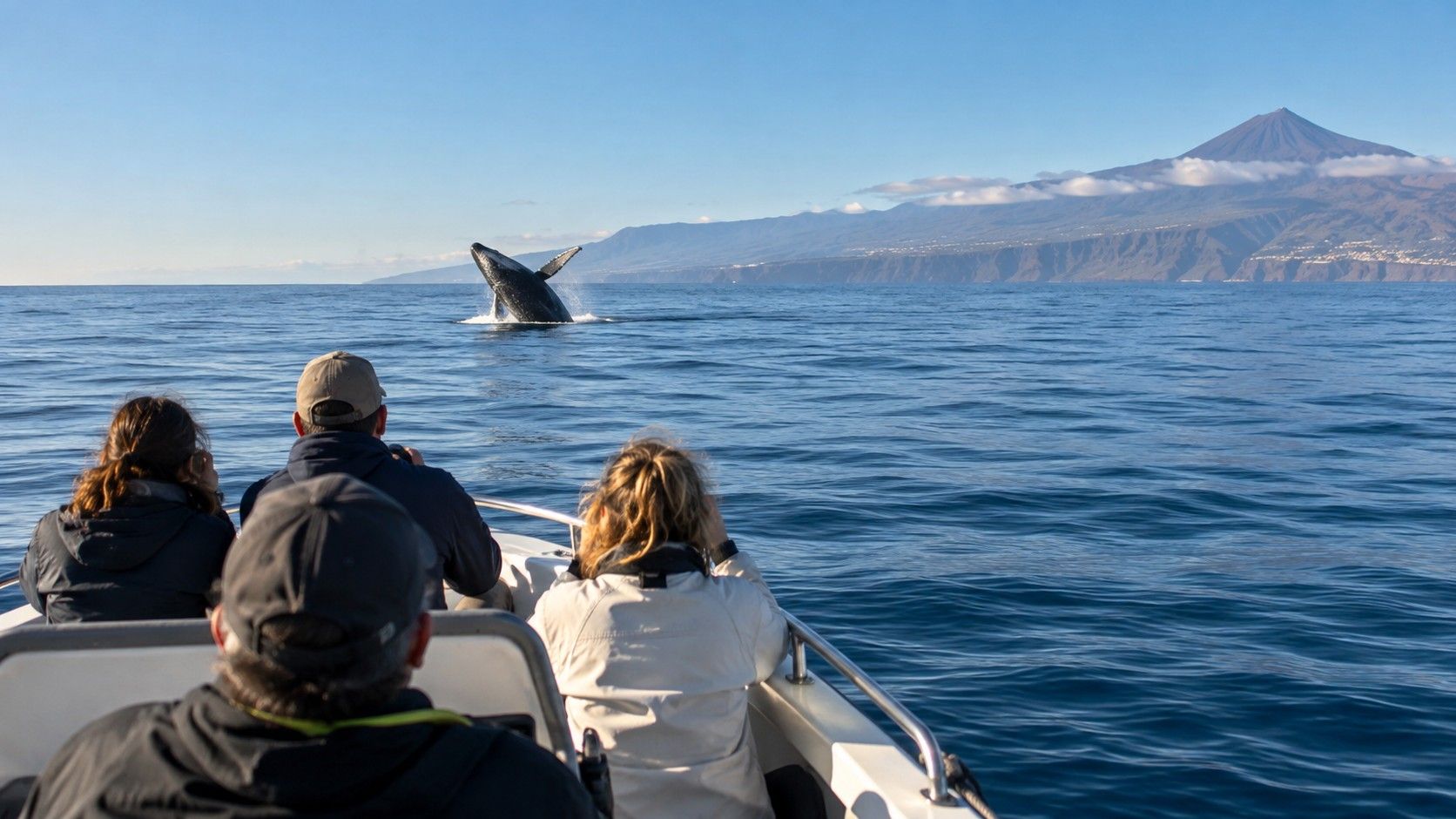
Tenerife’s waters support resident and visiting marine life, which is why these trips are popular. That is not the same as a guarantee of a close encounter, a particular species or a dramatic jump beside the boat. Good operators should talk about wildlife with care and keep respectful distance. A captain slowing down rather than chasing an animal is usually a better sign than a boat racing towards every splash.
Listen to the language used at the harbour. Words such as “likely” and “possible” are more honest than promises that sound certain. Ask what happens if conditions are unsuitable, whether the route may change, and how long the boat generally spends looking rather than assuming the brochure’s most striking image is the day’s standard outcome. Clear answers help you choose; evasive ones are useful information too.
When wildlife appears, give the moment some room. Put the camera down for a few seconds, keep voices low, and watch the animal’s behaviour rather than trying to lean over the rail for a closer frame. Distant fins can be more affecting than an edited social-media clip when you remember that you are sharing their water, not visiting an aquarium.
Keep the rest of the day deliberately easy
A boat trip may look like a compact item in an itinerary, but wind and motion have a quiet way of draining energy. The right follow-up is usually a simple lunch near the harbour, a pool, or a slow walk along the coast. It is rarely the moment to drive across Tenerife to Teide, tackle a mountain road or insist on a formal dinner an hour after docking.
Families benefit from a soft landing. Have dry clothes or a towel accessible, know where the nearest shaded place is, and let children be tired without treating it as a failure. Adults do better with the same arrangement, even if they pretend otherwise. A cold drink and a seat on land can transform the memory of the trip after a choppy return.
If the water turns rough enough to cancel or shorten an outing, do not turn that into a ruined day. Costa Adeje has promenades, beaches and places for an unhurried meal. The ocean has provided the most useful answer possible: today is better viewed from shore. That is less exciting to say at breakfast and much better than spending hours sick below deck.
Choose the trip that leaves room for uncertainty
A good wildlife outing is one where the logistics are simple, the expected conditions suit the group, and the rest of the day has no fragile connections. Book a duration you can comfortably enjoy, arrive with time, and avoid treating the return time as an exact appointment. Harbour operations, weather and wildlife do not always line up with a holiday spreadsheet.
There is no need to turn the trip into proof that you have completed Tenerife must do activities. If you see marine wildlife in calm water and return pleased, that is a fine result. If you spend a breezy hour looking at the south coast from a boat and decide you prefer solid ground, that is useful knowledge too. The point is to choose well, respect the sea and let the animals keep their side of the day unscripted.