The first hours on Tenerife are easy to overfill. A flight, a rental counter, a dark unfamiliar road and a late supermarket can make the island feel more complicated than it is. The useful goal is smaller: get to the right coast, make tomorrow easier, and leave the sightseeing for when you can tell the weather from the hotel lighting.
Choose the airport-to-base transfer before the flight lands
Tenerife has two airports, and they change the shape of an arrival day. Tenerife South Airport is close to the resort belt around Costa Adeje, Playa de las Americas and Los Cristianos; it is the forgiving arrival if your accommodation is on the south coast. Tenerife North Airport sits above Santa Cruz and below the greener northern slopes. It works well for Puerto de la Cruz or La Laguna, but a south-coast transfer after landing is a proper cross-island journey, not a quick final leg.
Put the address into your map before take-off and look at the final ten kilometres, not only the island-wide distance. A pin in Costa Adeje can mean a simple approach from the motorway, while an apartment a few streets uphill may require a narrow turn and a steep garage ramp. If you are collecting a car, save the booking reference and the accommodation contact offline. Airport Wi-Fi and a tired phone are a poor place to discover that the reservation is in an old email thread.
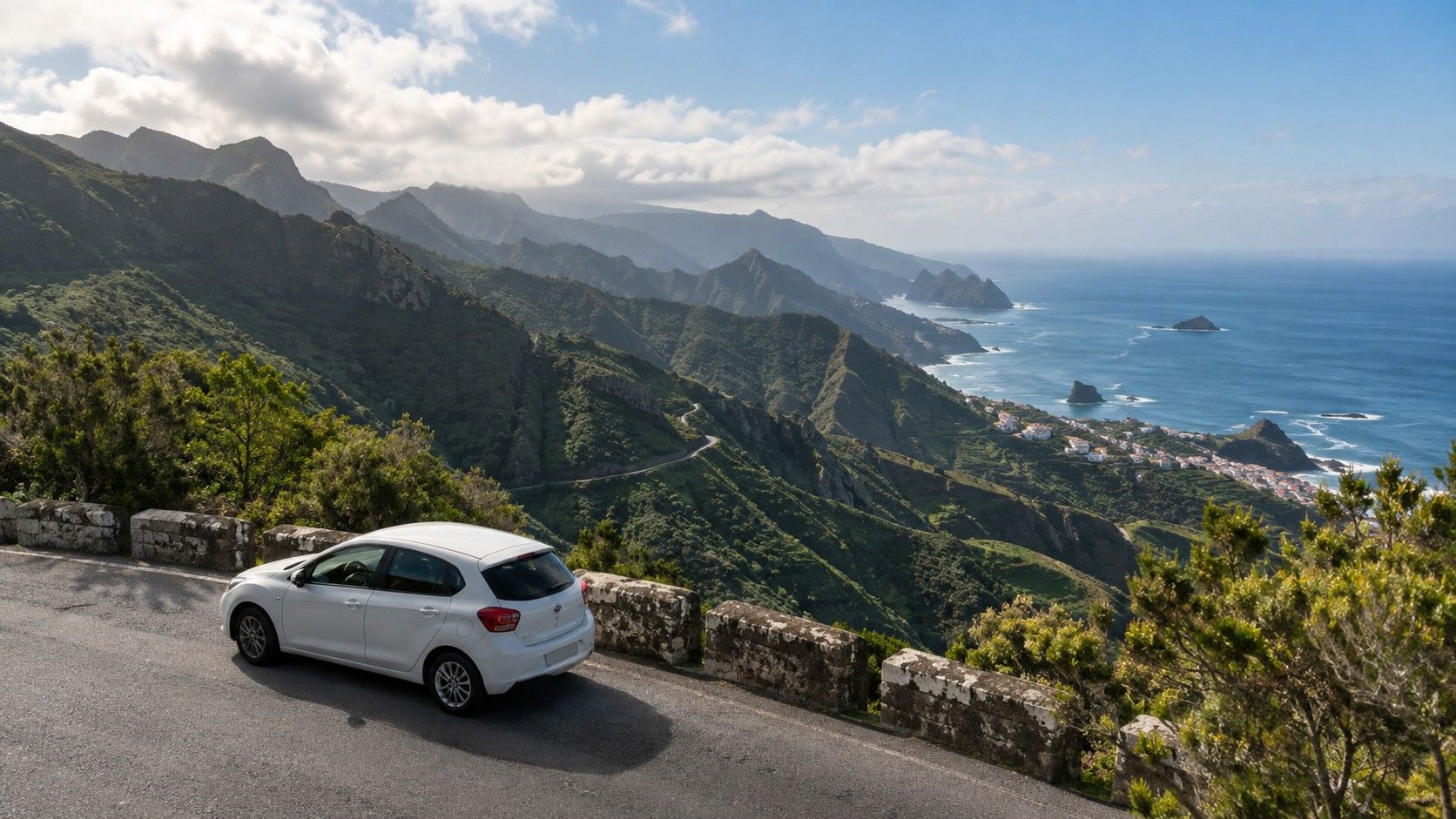
For a late arrival, decide between car, taxi and a pre-arranged transfer by the first evening rather than by the whole holiday. A car is useful tomorrow if you are heading for Teide, Anaga or scattered beaches. It can be needless baggage when the first two nights are in walkable Los Cristianos or central Puerto de la Cruz. The less romantic option often wins: take the direct ride, sleep, and collect a car in daylight if that suits the rest of the route.
Make the check-in the only fixed appointment that evening
On Tenerife, the last part of the journey often takes longer than the timetable suggests. A delayed bag, a queue at a rental desk, a missed exit around Santa Cruz or a host who is waiting with keys all have a way of stacking up. Send the accommodation a realistic arrival window before boarding, then update it once you are outside the terminal. Do not promise an exact minute when you still have luggage and transport to solve.
Ask one practical question in advance: where should the driver stop? Large hotels are obvious; holiday flats can have a street entrance, a gate, a side lane or a building name that maps do not display cleanly. In hillside parts of Costa Adeje, in older parts of Puerto de la Cruz, and in many northern villages, the last approach matters more than the route from the airport. A clear message about parking, gate codes and the nearest landmark saves the sort of circling that turns a calm evening sour.
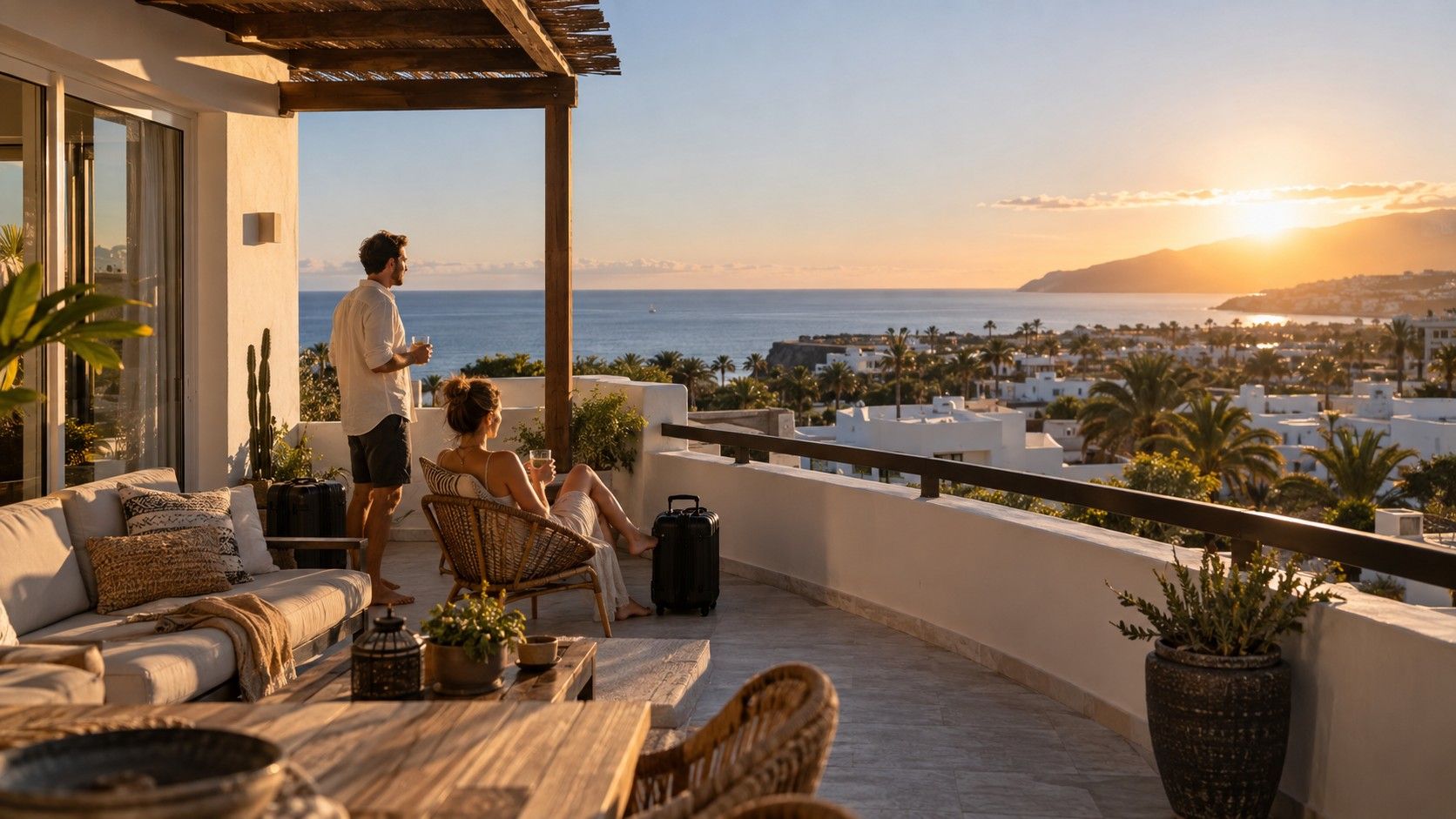
Once inside, check only the things that will disturb sleep or the morning: keys, water, charging points, air conditioning or windows, and where rubbish goes. The ocean view can wait. If there is a balcony, take two minutes to notice which direction the wind is coming from. That small detail helps explain why one nearby beach looks calm and another has white spray, and it keeps the first beach choice from being based on a booking photo.
Keep the first evening local, even when the sea is visible
A first-time Tenerife mistake is treating arrival night as a miniature holiday day. The map may show a famous beach, a sunset viewpoint and a restaurant twenty minutes away. In practice, the useful radius is the walk between your bed, dinner and a shop. On the south coast, that can be a promenade in Los Cristianos or Costa Adeje. In Puerto de la Cruz, it may be a short loop through town, past the harbour and back before the pavements become unfamiliar.
Eat somewhere close enough that returning does not require navigation. A simple plate of grilled fish, soup, tapas or a sandwich tells you more about your energy level than a long drive to a recommended dining room. If you arrive after the busiest hours, check opening times rather than assuming a kitchen is still serving. Resort areas often feel permanently open until you meet the one evening when a place is closed, full, or only offering drinks.
Use that small walk to identify three landmarks for tomorrow: the nearest grocery shop, the easiest way to the waterfront, and the nearest road or bus stop. Those are better first-night discoveries than a list of attractions. Tenerife becomes manageable once you know how your immediate neighbourhood functions; the volcano, ravines and distant villages can be added with a rested head.
Buy only what removes friction tomorrow
The first grocery stop is not a full holiday shop. Buy water, breakfast, something portable for a drive, and any item that would be annoying to search for before coffee. In a self-catering place, fruit, bread, yogurt and a few salty snacks are enough. If you have a morning hike or a long car day ahead, add nuts or sandwiches and check whether your accommodation has a reusable bottle or a small cool bag.
There is no need to stock a kitchen as if you are waiting out a storm. Supermarkets are common in the main resort areas and towns, while remote roads are where supplies become inconvenient. A modest shop leaves room to adjust once you understand the rhythm of the place. It also avoids hauling bags up stairs or across a windy promenade after a flight. On Tenerife, a very ordinary bottle of water feels much heavier after a late landing.
| Item | Why it earns space in the first shop | Can wait until tomorrow |
|---|---|---|
| Water and breakfast | Removes the morning search before a drive or bus | A full week of groceries |
| Portable food | Useful if the first route has few convenient stops | Restaurant research for the whole stay |
| Sun protection | Easy to forget after travel and useful on both coasts | Beach equipment you may not use |
| Basic coffee or tea | Makes an unfamiliar apartment feel functional | Specialty food shopping |
Match the first morning to the coast you woke up on
Do not try to prove that you are properly on Tenerife by driving across the island at dawn. The first morning is for reading your base. On the south coast, a promenade walk and a look at the nearest beach show you the difference between sheltered water, exposed water and a harbour edge. You can then decide whether the next day needs a boat trip, a beach bag or a car.
In Puerto de la Cruz or another northern base, start with the sky rather than a fixed view. The north can feel cooler and cloudier than the south, especially when trade winds are doing their usual work on the slopes. That is not a failed day. It can be good weather for a town walk, botanical gardens, a coffee stop, or a drive that stays on the northern side of the island. The mistake is expecting one coast to perform like the other at the same hour.
Give the morning one low-stakes task: buy a local SIM if you need one, collect a rental car, find the bus station, or walk to the beach you might use later. Finishing that task makes the rest of the holiday feel less improvised. It is also the moment to check shoes, layers and sun protection against reality rather than the packing list you made at home.
Use the weather as a route choice, not a verdict on the trip
Weather on Tenerife is local. A bright south-coast breakfast can sit under a different sky from La Laguna, Anaga or the slopes below Teide. The opposite happens too: a cloudy northern morning may open into a fine afternoon without anyone having done anything clever. Build the first day with a flexible middle. Keep a nearby coastal walk, café or town option, then add a longer drive only after looking at conditions where you are going.
Wind deserves as much attention as cloud. It affects beach comfort, sea trips and the temperature you feel in shaded streets. If the coast is blustery, do not force a towel day because it was the original plan. Choose a sheltered walk, a museum, a market or a different side of the island. A rental-car windscreen and a weather app are useful tools, but a glance at the sea and the trees outside is often the quickest reality check.
For Teide, mountain walks and remote beaches, keep a layer in the car even when the resort strip feels warm. Altitude and exposed viewpoints can change the mood quickly. The point is not to pack for every possibility; it is to avoid the stubborn decision to stay uncomfortable because changing plans feels like losing time.
Leave slack for flight delays, luggage and the useful kind of laziness
Arrival plans fail most often because every piece depends on the previous one running perfectly. Protect the first 24 hours by avoiding a prepaid dinner far from your base, a sunrise tour after a late flight, or a long drive with a return deadline. If luggage is delayed, report it and keep the paperwork, then carry on with the items you can replace locally. Do not let a missing bag turn into a night spent trying to solve a problem the airline may take time to answer.
A calm first day makes the rest of a Tenerife trip better because it gives you a working base: you know the road outside, the nearest food, the direction of the coast and the actual weather. That is enough. The island rewards a traveller who starts by making one day easy, then uses the saved energy for the places that really need it.