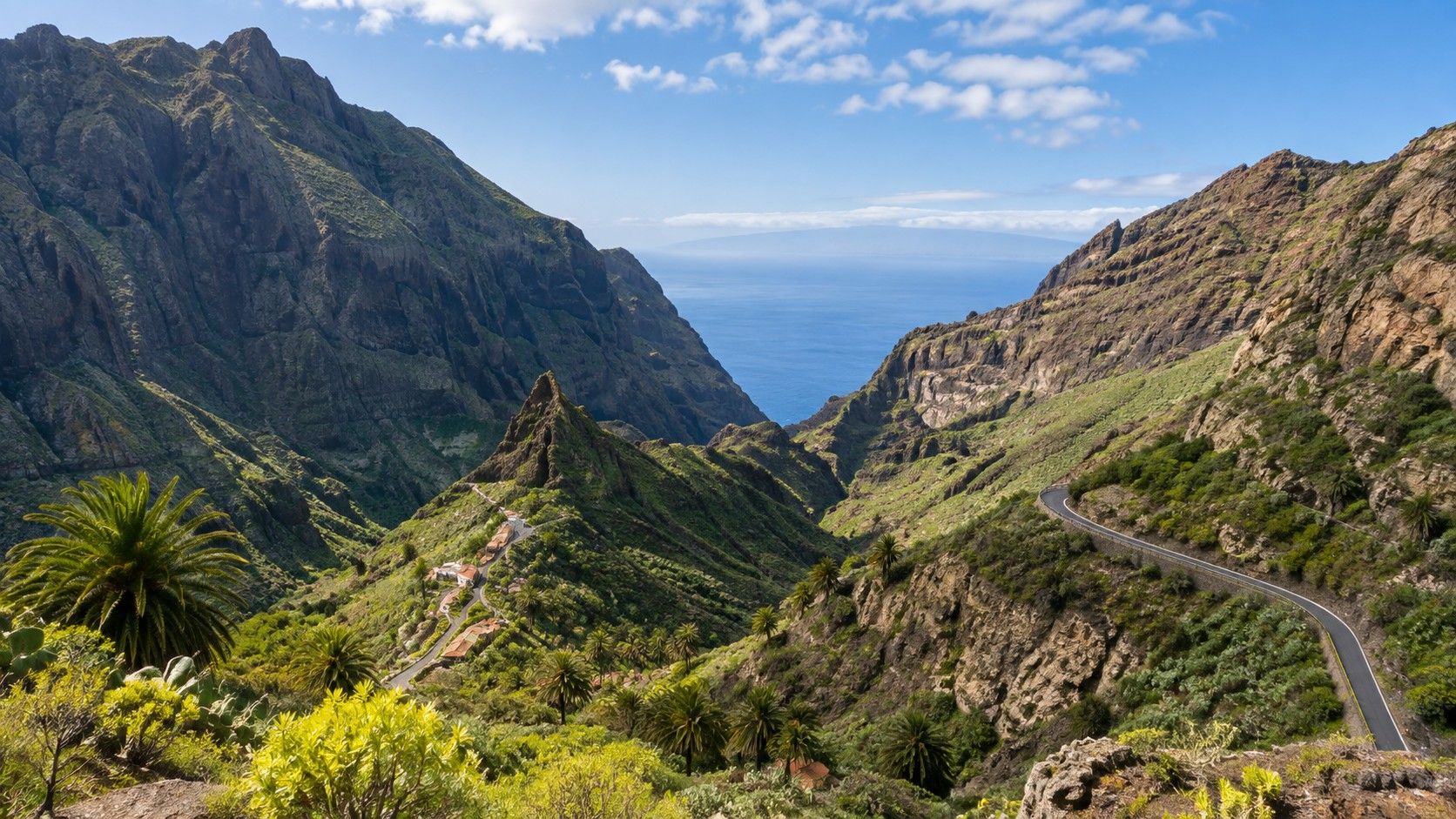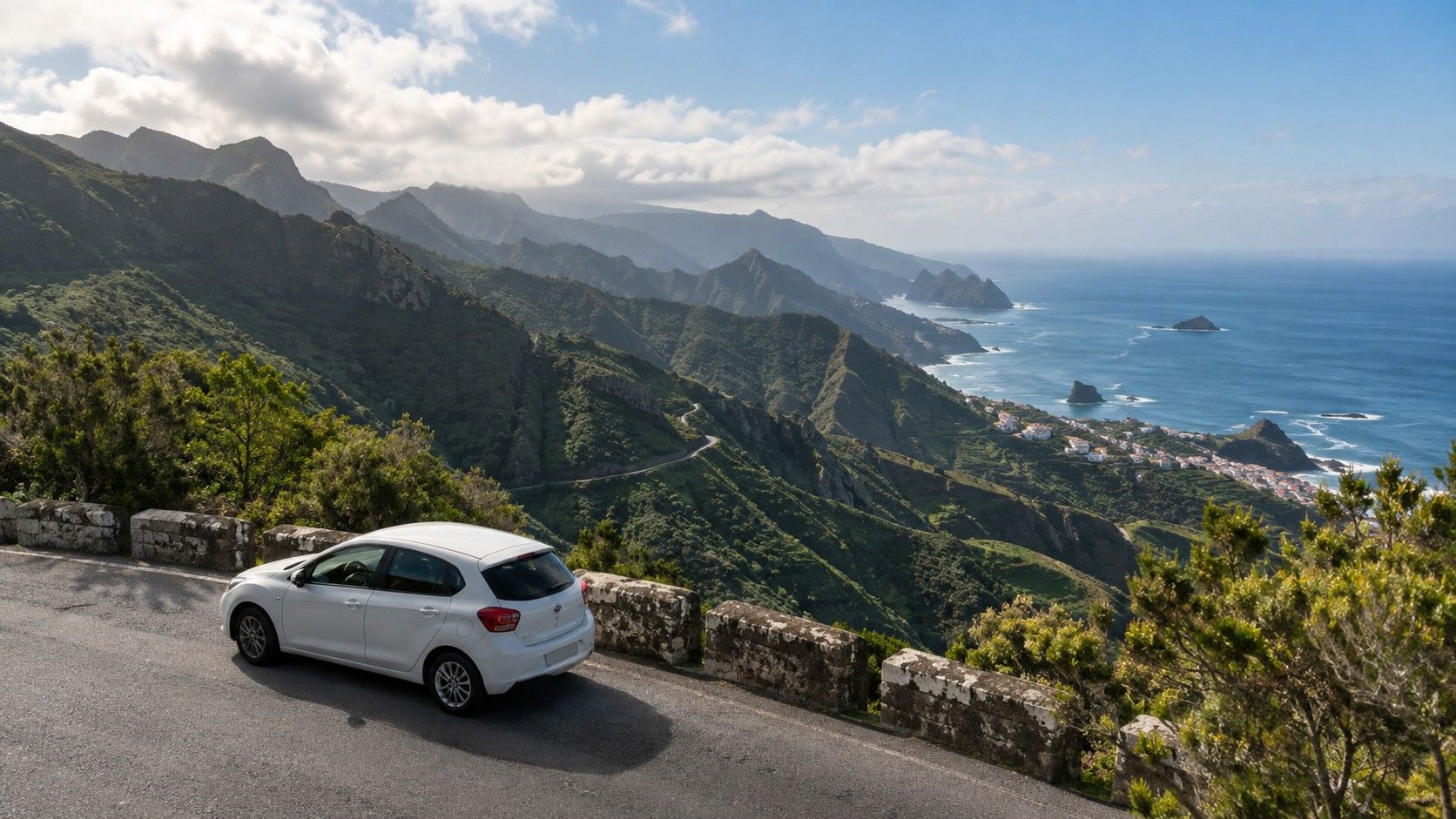
Anaga is one of those Tenerife days that looks compact until you are in it. From Santa Cruz de Tenerife, the green ridges seem close enough for a quick detour before lunch. Then the bends begin, the cloud arrives at a crest, a local car appears from the other direction, and the map's cheerful time estimate stops being persuasive. I like Anaga precisely because it resists being rushed, but I would only drive it with a plan that can lose an hour without falling apart.
First decide whether this is the right day for you to drive
People asking do you need a car in Tenerife usually mean the whole holiday. For Anaga, the answer is more specific: a car gives you reach and freedom, but it also puts one person in charge of narrow mountain roads for much of the day. If the driver dislikes blind bends, steep edges or meeting traffic where reversing may be necessary, this is not the route on which to test their nerves. A guided trip or a simpler day around Santa Cruz can be a better use of holiday time.
The roads through Anaga Rural Park are paved and used daily, yet that is not the same as relaxed. The lanes can narrow, corners conceal oncoming cars, and the pace depends on whoever is ahead. I keep the driving day small: no packed schedule before entering the park, no fixed dinner reservation on the other side of the island, and no assumption that a passenger can navigate while filming every bend.
A compact rental car is easier to place on the road and easier to park in the small spaces that appear near viewpoints and villages. Fuel should be dealt with before the remote stretches, ideally around Santa Cruz rather than when the gauge begins to look theatrical. There may be places to buy food later, but the point is not to arrive hungry and then accept the first option because nobody has the energy to think.
Start from Santa Cruz with fewer stops than your map suggests
Leaving Santa Cruz de Tenerife early helps for reasons more ordinary than sunrise photographs. You get clearer parking, calmer roads and time to react if cloud changes the route. I would pick one main direction, such as a ridge route toward Taganana, and make the return flexible. Trying to collect every named viewpoint between the city and the north coast turns a good drive into a sequence of short, tense manoeuvres.
On the first climb, I watch the traffic pattern rather than chasing the landscape. Let faster local drivers pass when there is a safe place. Leave a decent gap behind the car ahead; stopping suddenly for a view is common. If someone in the car gets motion sick, this is when the day needs honesty. A short break at a safe pull-off, water and fresh air are better than pushing onward because a lunch plan has acquired too much authority.
The map is useful for direction, not for promises. A twenty-kilometre section can take much longer than the same distance on the south coast because every curve asks for attention. Add time for a wrong turn, a queue at a narrow point, parking and the slow process of getting everyone back into the car. These are the costs that disappear in a route planner and reappear in real life.
| Choice | Good fit | Trade-off |
|---|---|---|
| Short ridge drive and return to Santa Cruz | First-time visitors, uncertain weather, nervous drivers | You may miss the coast near Taganana, but the day stays calm |
| Drive to Taganana for lunch, then return | Travellers happy to spend most of the day on the road | Lunch timing and parking can dictate the whole afternoon |
| Anaga plus another far-side destination | Only for an early start and a confident driver | Easy to become a long, tiring loop with little time outside the car |
Use viewpoints as pauses, not targets to collect
Anaga has plenty of places where the road opens briefly onto ridges, folds of forest or the north coast. That does not mean every signed mirador deserves a stop. I choose two: one before the road feels fully remote, and one that fits the weather on the day. In cloud, a viewpoint may offer ten metres of visibility and a cold blast through the car door. That is a signal to keep moving, not a reason to wait in the hope that the valley will perform.
Parking needs its own judgement. A space that works for a small car may still leave little room to open doors, and a roadside shoulder is not a viewpoint simply because another vehicle has stopped there. If the safe parking is full, I continue. Anaga gives you more scenery around the next bend; it rarely gives you more patience after a bad parking decision.
When the view is clear, give it enough time. Look at the road you have travelled, check the next part of the route, and let passengers use the break before they really need one. This is more useful than a fast photograph followed by another half-hour of corners. I have found that two deliberate stops make the landscape more memorable than six rushed ones.
Sort lunch and water before the remote stretch decides for you
Taganana is often the natural lunch marker, but it should not become a deadline. Arriving very late, hungry and impatient makes any village feel less charming than a map pin promised. I take water and something small to eat from Santa Cruz, then treat a meal in or near Taganana as a welcome pause rather than a rescue operation. Opening hours, queues and the exact mood of a small place can change, so I avoid building the drive around a precise table time.
On the north coast, weather can make an outdoor lunch feel very different from the sunny south. A windproof layer earns its place here too. If the coast is rough or the cloud is low, I do not linger to prove that I reached it. A warm drink and a simple meal indoors can be the sensible version of the plan, with the drive back started while everyone is still alert.
Keep the car stocked with water, a light layer and a phone charged before the signal becomes patchy. Those are plain details, but Anaga is where plain details run the day. The passenger who wants a snack, the driver who needs a quiet five minutes and the child who has had enough of bends all arrive at the same moment more often than anyone expects.
Let cloud set the route instead of fighting it
Cloud in Anaga is part of the place, not a mistake in the forecast. It can hang across a ridge while a lower road is clearer, then lift long enough for a view and close again. I watch how far ahead I can see and how the driver feels, rather than trying to decode every weather symbol. If visibility is steadily poor, reduce the ambition: skip the furthest turn, use a safe place to reverse direction, and aim for lower ground.
Fog changes more than the view. It makes road markings harder to read, hides approaching traffic until late and slows the car enough to shift lunch and daylight plans. Use lights appropriately, keep the pace modest and do not stop in a lane for a photograph. The same patience matters after rain, when damp shaded bends can feel less forgiving than the bright, dry images people associate with Tenerife.
A clear break in the cloud is welcome, but it is not a contract for the rest of the day. I take the view that is available, then keep the return route in mind. The most satisfying Anaga day usually has one good ridge scene, one unhurried meal and enough energy left for the drive back, rather than a record of every road reached.
Finish early enough to enjoy the return
The return to Santa Cruz can feel longer than the outward drive because the novelty has worn off and the driver has already spent hours concentrating. I set a loose turning time before leaving the city, with an earlier option if cloud, traffic or tiredness build. It helps to say this aloud at breakfast; otherwise the last stop turns into a negotiation conducted beside a car with everyone wanting different things.
For visitors choosing places to visit in Tenerife by car, Anaga works best as the main event of one day, not a bonus attached to three others. Leave room for a slow road, a full car park and a change of mind. The reward is a route that still feels human by the time you reach the city again, with the mountains as part of the day rather than an obstacle course you survived.