A black sand beach changes the small mechanics of a beach day before it changes the view. The towel gets hotter, the sand finds every fold of a bag, and the sea can look darker and more serious than the pale bays shown in holiday adverts. That is part of Tenerife’s appeal, provided you arrive with the right expectation: volcanic sand is not a novelty to tick off, but a different kind of coast with its own habits.
Expect a different surface under your feet
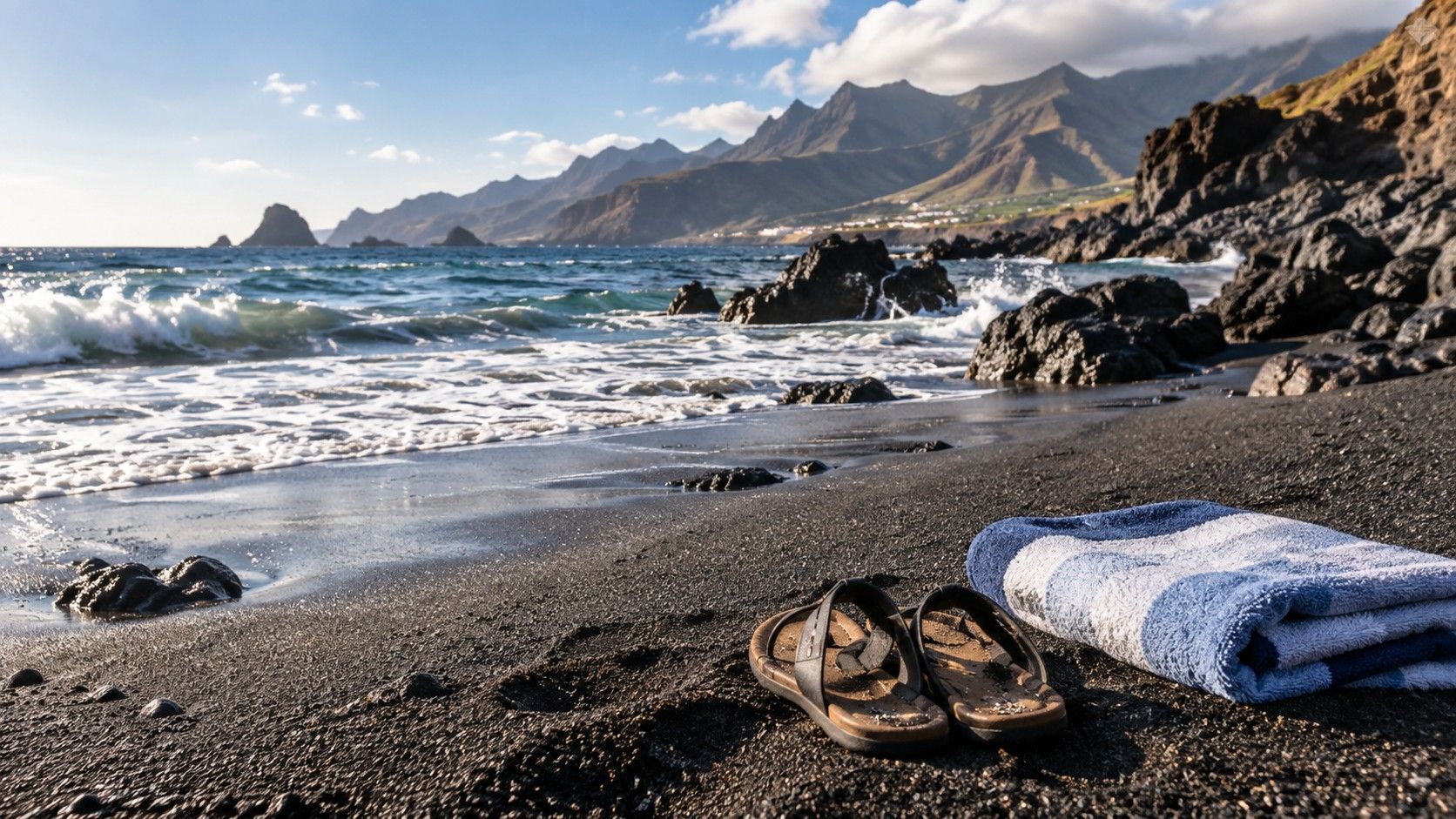
The first surprise at a black sand beach is practical rather than visual. Dark volcanic grains absorb heat quickly. On a bright, still afternoon, the few metres between towel and water can feel much longer than it looks. I have watched people make a dash barefoot, stop halfway, then perform an undignified hopping retreat towards their sandals. It is funny from a shaded café table and less funny when you are carrying a child or a hot coffee.
Bring footwear that can get wet and sandy. Flip-flops work for a flat promenade but are easily lost in a shore break; water shoes or secure sandals are more useful where the entry is stony. The grains themselves can be fine and soft in places, yet a volcanic beach often includes pebbles, shelves or a firmer strip near the water. Test the first few steps instead of assuming that one stretch describes the whole bay.
Towels need a little more thought too. Black sand has a talent for advertising itself on pale fabric and inside rental-car footwells. A thicker mat or a foldable beach blanket gives a better barrier than a thin hotel towel, and a spare bag for wet footwear keeps the return journey civilised. This is not a reason to avoid the coast. It is the sort of minor preparation that lets you enjoy it without spending the evening shaking sand from everything you own.
Let the water decide the plan, not the colour of the beach
People sometimes search for a black sand beach as though the sand guarantees a particular swimming experience. It does not. The Atlantic Ocean is the main character on Tenerife’s coast, and wave conditions, wind and the shape of the bay matter more than the shade of the shore. A dark beach can be calm on one day and a place to admire from well back on the next.
Look for flags, read the local signage, and spend a few minutes watching the sea before spreading a towel. Are waves breaking in a regular line? Is there a strong pull where people enter? Are locals swimming, or are experienced swimmers standing on the sand and looking at the water with their arms folded? That last detail is often more informative than a phone forecast. If there is doubt, choose a walk, a café, or a natural pool with safe access rather than trying to prove a point against the surf.
Sea entry is where holiday confidence tends to outrun common sense. On some north-coast stretches, a wave that appears modest from the promenade can knock a person off balance over uneven ground. Avoid turning your back to the water near the edge, keep children close, and do not carry valuables into the wash while trying to find the perfect depth. A beach day is still valid when the only swimming is ankle-deep.
| Beach-day condition | What it changes | A sensible response |
|---|---|---|
| Bright, still midday | Dark sand can become painful under bare feet | Keep footwear close and choose shade before settling in |
| Visible swell or warning flags | Water entry may be unsafe even when the beach looks inviting | Stay back from the wash and make it a shore day |
| Wind across the beach | Sand moves into food, eyes and towels | Use a windbreak if permitted or choose a more sheltered bay |
| Mixed sand and stone at the edge | Walking and entering the sea take more care | Wear water shoes and check the route in and out first |
Choose shade and timing before the sand gets hot
On pale sand, many people can decide where to sit after arriving. On volcanic beaches, it is better to scan for shade, wind direction and the distance to the water first. There may be palms, a wall, a café terrace or only the shade you brought with you. If you travel with someone who burns easily, do not place the day’s comfort on the hope that a cloud will arrive at lunch.
Morning and later afternoon are usually kinder for walking on the sand and for using a dark towel without it feeling like a radiator. The exact weather varies by coast, but the principle holds: give the hottest part of the day a plan B. A slow lunch, a village walk or a drive to a viewpoint can be more pleasant than insisting on another hour by the water when everyone is hot and irritable.
Wind deserves a separate check. It cools the skin, which can make the sun feel less aggressive than it is, while also sending fine sand across every open snack. Keep water accessible, use sun protection before the beach rather than after it has become awkward, and anchor light items. An inflatable towel clip is less glamorous than a photograph, but it saves a surprising amount of annoyance.
Understand why the north and south feel like different islands
The north coast and south coast are not interchangeable versions of the same beach day. The south has more resort infrastructure, many more deliberately sheltered options and a drier feel in general. The north often feels greener, steeper and more exposed to the Atlantic. Its black sand beaches can be striking, but they ask you to pay more attention to conditions and to accept that swimming is sometimes not the main activity.
That distinction matters when choosing a base. Someone who wants guaranteed-looking sun loungers and an easy swim after breakfast may prefer the south, then take a day trip north for a different landscape. Someone who likes coastal walks, changing weather and a beach that feels tied to the surrounding town may enjoy the north more. Neither preference is more authentic; they produce different days.
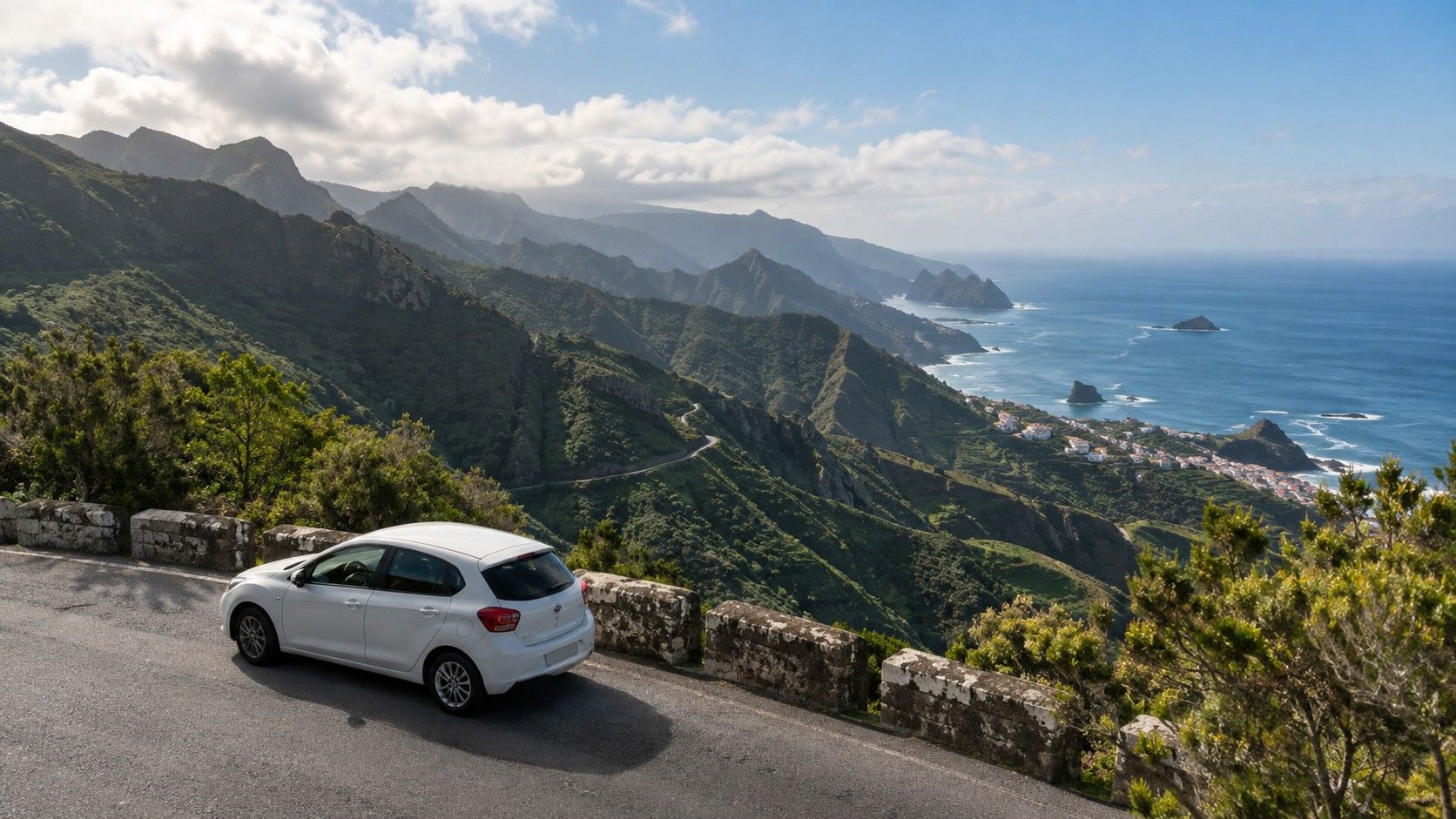
Do not chase a specific beach across the island simply because one photograph looked dramatic. Tenerife’s roads take time, parking near popular coastal areas can be awkward, and a grey north-coast morning may be entirely normal while the south is bright. Check conditions on the day, then choose the coast that works with them. Flexibility beats a cross-island drive undertaken to match somebody else’s weather.
Make surf days useful instead of calling them failed beach days
When the water is rough, the worst response is to sit angrily beside it for hours because swimming was the original plan. Volcanic shores are good places to watch the Atlantic work: dark sand, white water and the changing light make even a short walk feel substantial. Find a safe position away from exposed rocks and look at the coast rather than treating it as a closed swimming pool.
A town near the beach can carry the rest of the day. Have lunch somewhere with a view, walk a harbour or promenade, and keep an eye on the water from a distance. If there are natural pools, use them only when their access and local conditions are clearly suitable. Wet rock becomes slippery fast, and a low wall is not a promise of protection from a larger set of waves.
This is where the volcanic setting earns its place in the itinerary. The point is not to pretend every dark beach is a tropical bathing spot. It is to enjoy the coast for what it is: powerful, changeable, occasionally inconvenient, and far more memorable when you stop fighting its mood.
Leave the beach with less sand and more energy
Before returning to the car, rinse feet where facilities allow and shake towels well away from other people’s space. A small bottle of water in the boot is handy for a final clean-up if there is no shower. Put wet items in a separate bag, especially if you have another drive planned; volcanic sand against bare skin in a car seat is an unpleasant souvenir.
Keep the rest of the day light. A black sand beach can involve more walking, heat and wind than expected, even when you did very little in the usual sense. Pair it with one nearby meal, a short coastal stop or an early return to the hotel. There is no need to add a mountain road merely because the afternoon has a blank space.
Black sand beaches in the Canary Islands are worth seeking out, but the best visits are not built around a colour. Wear the right shoes, respect the sea, choose shade early and let the coast tell you whether it is a swimming day. That turns an attractive photograph into a genuinely comfortable Tenerife day.