The north-versus-south question on Tenerife is less about finding the correct coast and more about avoiding a mismatch. A south base can make the first beach day effortless and turn northern drives into long outings. A north base gives texture, towns and greenery, then asks you to accept that sunshine and sea conditions are not distributed evenly across the island.
Start with the day you want to repeat, not the sights you might visit once
Imagine the ordinary day between excursions: breakfast, a walk, a swim if the sea allows it, dinner, and the journey back to bed. If that day needs reliable resort infrastructure, broad promenades and an easy choice of restaurants, the south coast has a clear advantage. Costa Adeje, Playa de las Americas and Los Cristianos are built for visitors who want the outside world close at hand without much planning.
If your good day starts with a town street, a coffee under changing cloud, and a willingness to drive to the coast or a trail, the north may feel more alive. Puerto de la Cruz is the obvious northern base for many travellers because it has a real centre, waterfront walks and enough daily services to avoid feeling marooned. It is not a quiet rural hideaway, and that is part of its usefulness.
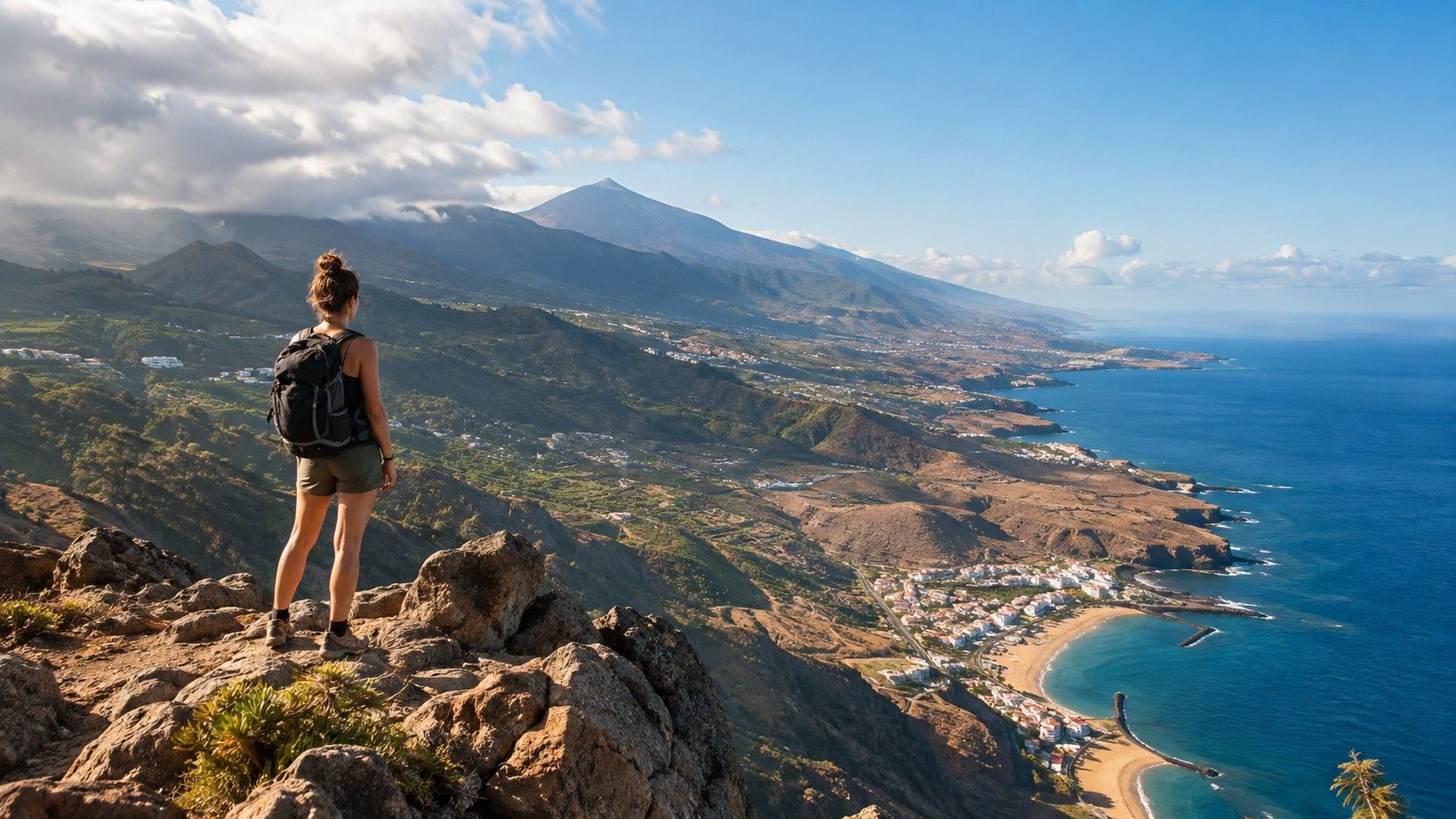
Make a short list of the activities that matter on three separate mornings, not a catalogue of island attractions. Beach before lunch, pool time, easy evening meals and short transfers point south. Hiking, northern villages, green slopes, local city life and a less resort-shaped atmosphere point north. Tenerife is small on a map but its roads, elevation and weather make a base choice felt every day.
What the south makes easier: beach rhythm and low-effort evenings
The south coast is practical when the holiday needs to work even on a low-energy day. In Costa Adeje, the seafront, beaches, supermarkets and restaurants tend to sit within a predictable orbit. Los Cristianos has a busy harbour and a walkable centre; it suits people who would rather step outside than make a driving plan after dinner. Playa de las Americas gives more nightlife and a louder visual tempo, which is either useful or exhausting depending on the traveller.
Sun is not guaranteed by a hotel address, but the southern resort strip is usually the safer bet when trade winds leave cloud resting on northern slopes. That matters less for someone with a car and a loose schedule. It matters a lot when a family has one beach afternoon, when a short break has few spare days, or when swimming and outdoor meals are the main point of being on Tenerife.
The trade-off is that the south can feel designed around holidays from the moment you leave the room. That is not a criticism; it simply narrows the decisions. You may find a familiar-looking promenade, larger hotels and a constant choice of menus. Some travellers relax immediately in that setting. Others start looking for older streets, more shade and a different relationship with the island after a day or two.
What the north makes easier: town life, cooler air and varied short drives
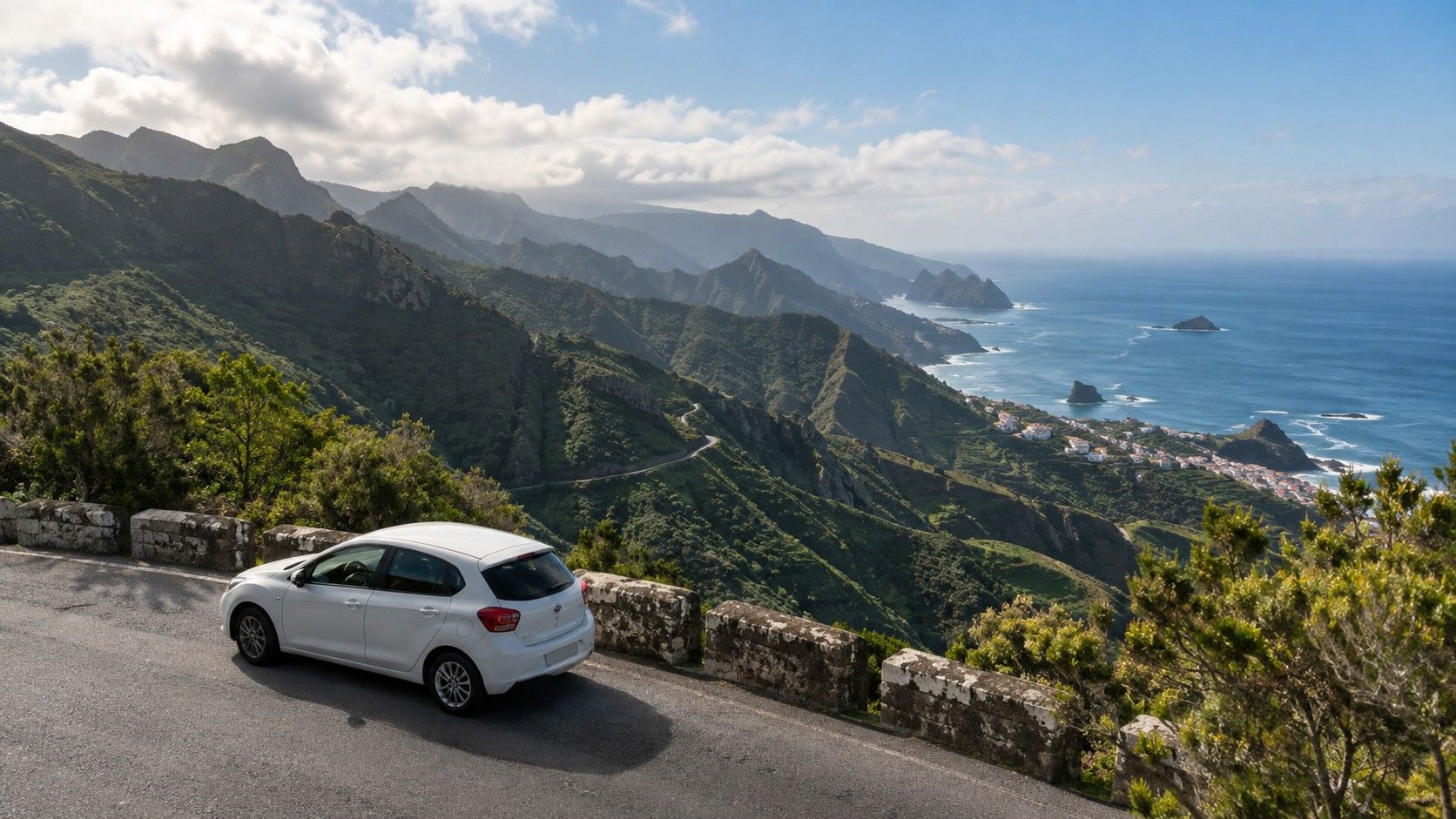
Puerto de la Cruz gives the north a workable centre rather than just a scenic label. You can walk to food, shops and the waterfront, but you are also closer to La Orotava, La Laguna, the Anaga side of the island and several routes that feel less like a dedicated resort transfer. The roads still require attention; slopes and bends are real, particularly once you leave the main routes. Yet many northern day trips begin with less backtracking.
The north often has more visible cloud cover, and travellers who book it expecting uninterrupted pool weather can be disappointed. The same conditions support greener gardens, softer midday temperatures and days that are more comfortable for walking. A cloudy breakfast is not proof that the whole coast has failed. It may clear, it may stay mild, or it may be the right cue to visit a town rather than forcing a beach day.
Beach access needs an honest reading here. Northern swimming areas and black-sand beaches can be striking, but sea conditions deserve respect. A beautiful shoreline is not automatically a casual swim. Look at flags, waves and local signs instead of treating the water as a hotel amenity. For a traveller who wants regular easy sand-and-sea time, that uncertainty shifts the balance south even if the north looks more appealing in photographs.
| Question | South coast answer | North coast answer |
|---|---|---|
| What happens on a tired day? | Promenade, beach, food and shops are usually close together. | Town walking works well, but beach comfort can be more weather-dependent. |
| What does the weather change? | It often preserves an outdoor resort day. | It may redirect the day toward towns, gardens or a different coast. |
| How easy are evenings? | Very easy in Costa Adeje and Los Cristianos, with many nearby choices. | Puerto de la Cruz is walkable, but the mood is less resort-standardised. |
| Where do long island drives begin? | Teide and western routes are convenient; Anaga and far north take commitment. | Northern towns and Anaga are closer; the south is a longer deliberate outing. |
Read beach access as a practical test, not a blue patch on a map
When comparing Tenerife bases, ask what the beach day actually requires. If you want to walk down after breakfast, spread a towel and return for lunch, choose accommodation by the real pedestrian route and the kind of water nearby. A map may show a short line to the sea while hiding a steep descent, a harbour wall, a road crossing or an exposed stretch of coast. In Costa Adeje and Los Cristianos, this test is often easier to pass.
On the north coast, the sea may be part of the view more often than part of the daily routine. That can still be a good choice. Some people prefer natural pools, coastal paths and a colder, livelier edge to the water. The key is not to book a northern stay under the assumption that every afternoon will behave like a sheltered southern beach. The Atlantic sets the terms, and the sensible response is to have an alternative within reach.
For families and tentative swimmers, check the immediate beach rather than relying on an island reputation. Look for calm-water options, shade, toilets and an easy return route. For confident swimmers, flags and local warnings still matter. Choosing the south does not remove the need to read the sea; it simply gives more days where the easy version of a beach plan is available nearby.
Count driving time in energy, not only kilometres
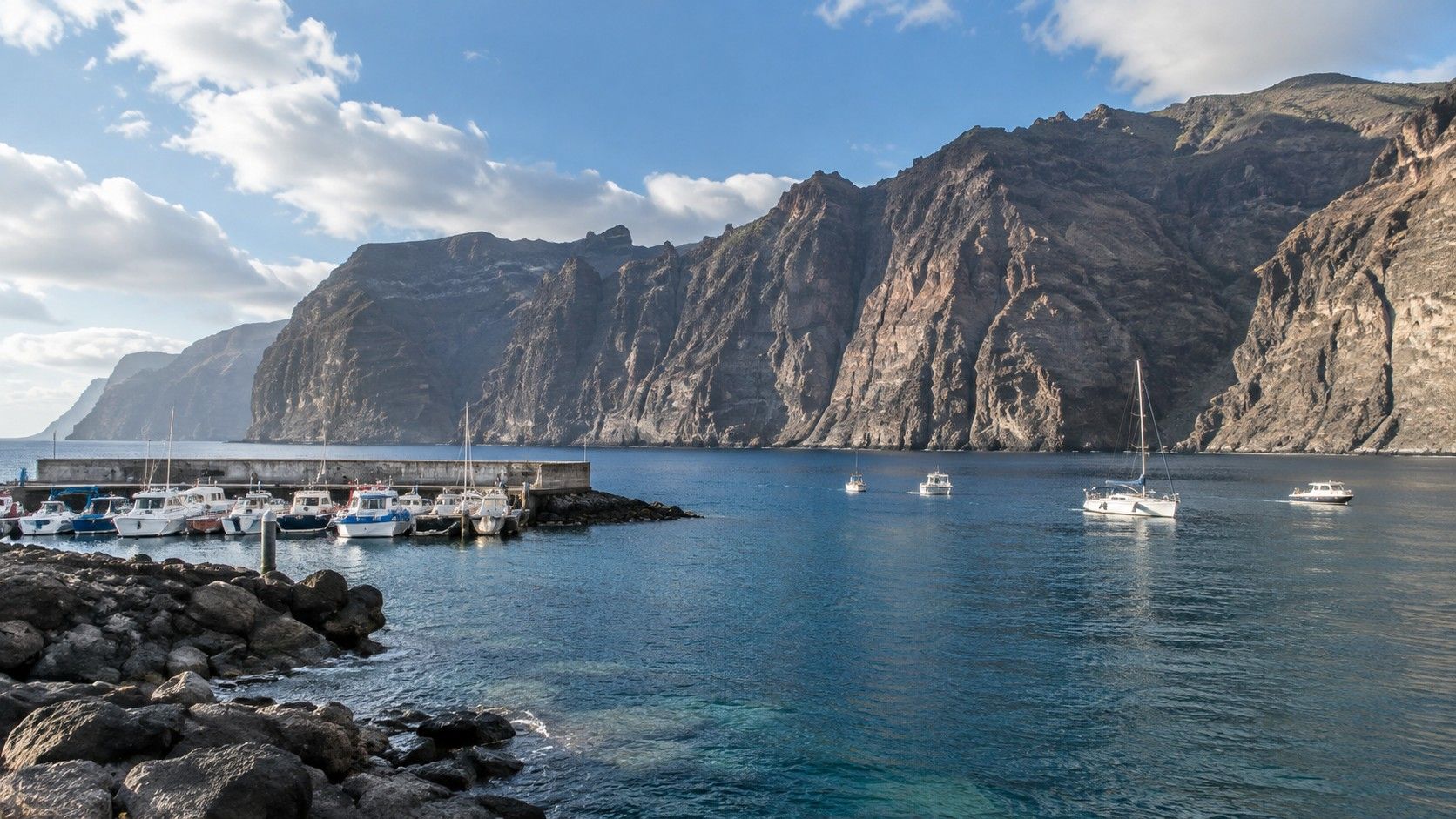
A Tenerife itinerary can make either coast look central if you only compare distances. The daily reality is different. Mountain roads, traffic around urban areas, parking and a return after sunset change the cost of an excursion. From a south base, Teide, Los Gigantes and many western viewpoints fit naturally into a day. Anaga, La Laguna and the green north can be excellent trips, but they deserve an early start and a willingness to return later.
From Puerto de la Cruz, northern towns and the Anaga direction feel less distant, while the resort south becomes a chosen excursion rather than a casual detour. If you want one day in Costa Adeje and a few days exploring towns, that is manageable. If the holiday includes repeated boat departures, beach afternoons and late dinners in the south, the drive starts to consume the relaxed time you booked the island for.
Do not assume a rental car solves the issue by itself. It adds freedom, but it also adds parking, unfamiliar roads and the question of who is driving after a long day. A south base works well for visitors who want the option to drive without needing it for every meal. A north base rewards those who enjoy moving around in daylight and do not resent a changeable plan.
Let evening walkability decide more than you expect
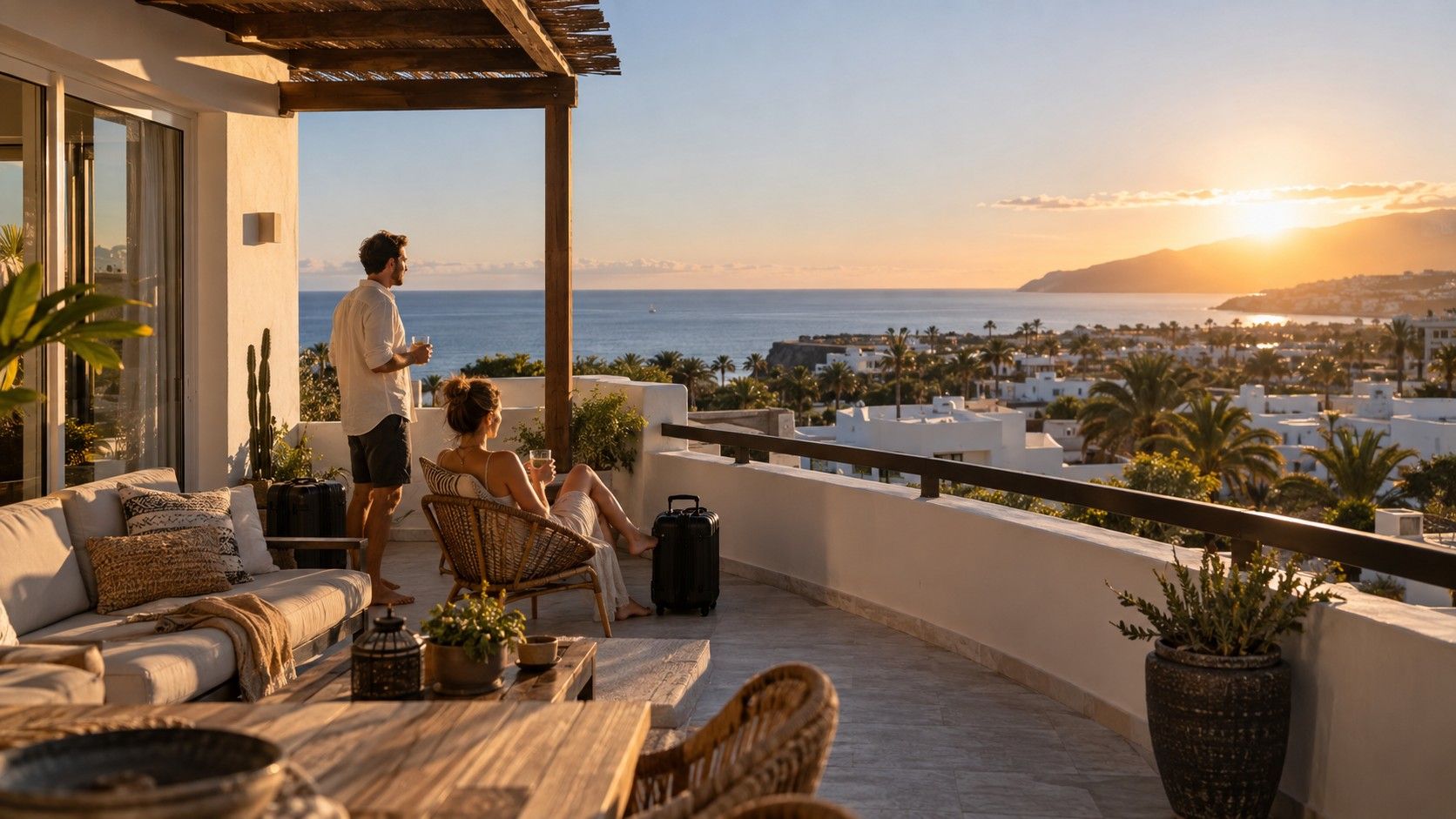
Accommodation descriptions often focus on pools and views, but the evening outside the property can define a stay. Los Cristianos is useful because it has a harbour-side pulse, everyday shops and places to eat within an easy stroll. Costa Adeje can be smoother and more resort-oriented, with long seafront sections that suit an after-dinner walk. Playa de las Americas is a better fit for travellers who want activity close by and do not mind a busier soundtrack.
Puerto de la Cruz has a different type of walkability. There are older streets, plazas, the harbour area and restaurants that feel connected to the town rather than arranged around a single hotel strip. Some streets climb, some pavements are uneven, and the weather can make an evening feel cooler than a southern one. Pack a light layer and choose a location close to the part of town you will actually use instead of assuming every northern address is equally walkable.
For a couple without a car, evening walkability should carry more weight than a dramatic balcony view. For a group with a driver, it still matters because nobody wants to negotiate a parking space for every small dinner. The best base is often the one where the final two hours of the day require no logistics at all.
Split the stay when the holiday has two genuinely different priorities
A split stay is worthwhile when it removes repeated cross-island drives, not when it is used as a badge of thorough planning. Spend part of the trip in the south if easy beach time, a boat trip or a slow resort rhythm matters. Move north when you want town life, northern roads, gardens or more time around La Laguna and Anaga. The change gives each coast room to be itself instead of turning both into rushed day trips.
There is a cost: packing, check-out, check-in and the loss of a half-day. On a short break, that disruption can outweigh the benefit. Four or five nights in one good base usually feels calmer than two hurried bases. On a longer visit, a split can be sensible if you group outings by side of the island and avoid moving on a day already committed to a long drive.
Choose the order by airport and departure rather than a romantic idea of saving the best for last. Landing at Tenerife South Airport and starting in the south removes a difficult first transfer; a later move north can happen in daylight. Leaving from Tenerife North Airport may make a final northern night useful. The cleanest route is the one that does not turn luggage into an excursion.
Avoid choosing from one map pin, one weather forecast or one hotel photo
Before booking, open the map in walking mode and trace the route to breakfast, the nearest beach or waterfront, and the place you would eat if you arrived late. Then look at the route to the first two outings you actually want. This small check exposes the difference between a coastal address and a usable base. It also reveals steep streets, isolated developments and places where a car is more necessary than the listing suggests.
Weather forecasts are useful for a week, not as proof that one coast is objectively better. Tenerife has microclimates, and cloud cover changes the feeling of a neighbourhood as much as a temperature number. Pick the south when certainty around outdoor resort time is important. Pick the north when you want variety, do not mind adjusting the day, and would rather have a town at your door than a polished holiday strip.
The right choice is often obvious once you describe the evenings and mornings you want. Costa Adeje and Los Cristianos make the uncomplicated version of Tenerife easy. Puerto de la Cruz makes a more varied, town-based version easy. Neither choice needs defending; the costly mistake is booking one while expecting the daily rhythm of the other.