A Tenerife walk can begin beside warm sea air and end in wind strong enough to make a thin jacket feel imaginary. That contrast is why a good hiking day starts before the trailhead: choose the route for the conditions you have, carry what will make the return manageable, and decide in advance that turning back is an ordinary option rather than a defeat.
Match the walk to the weather you can see, not the one you hoped for
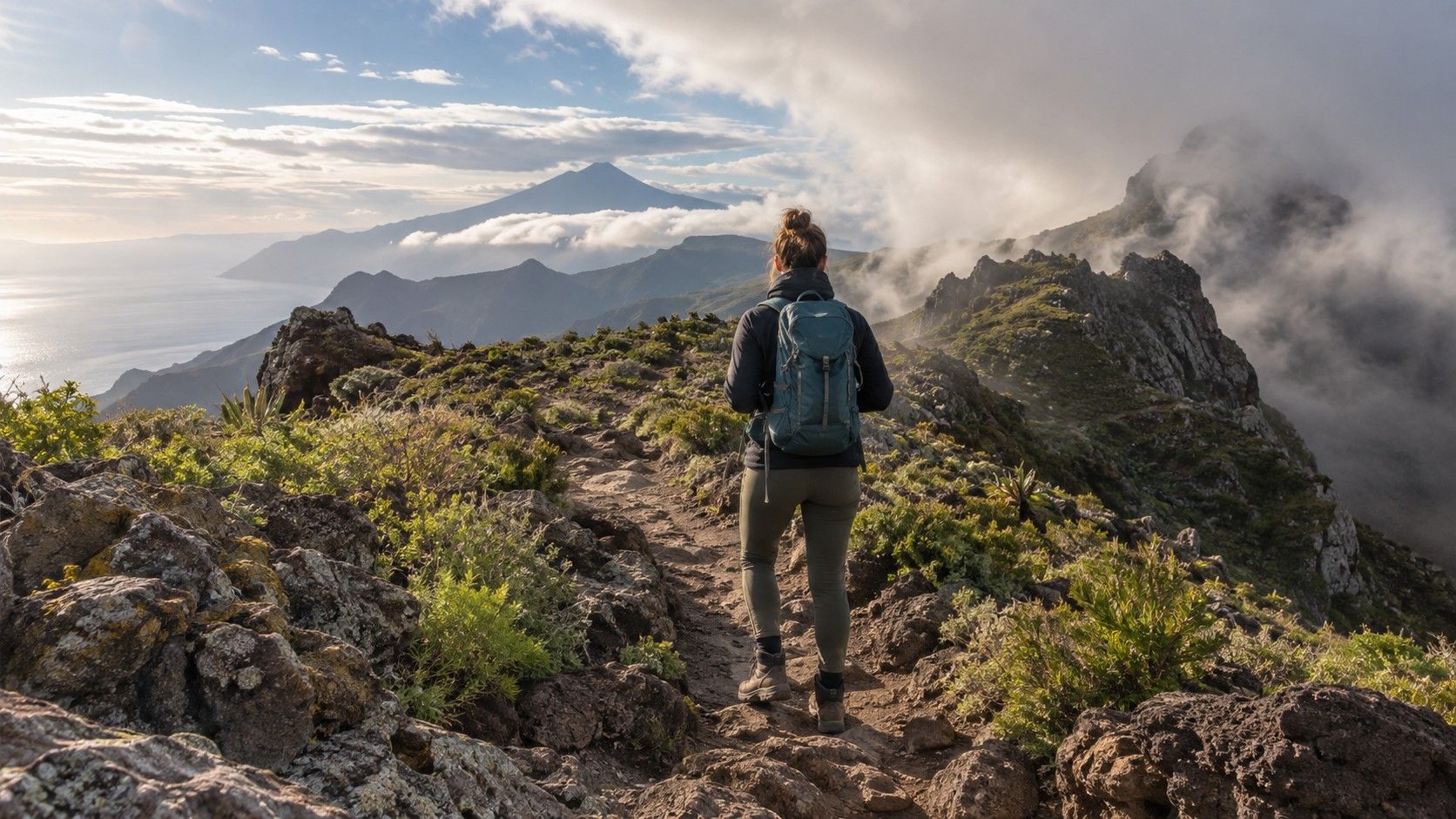
Tenerife has several climates at once. A clear morning on the south coast says little about cloud in Anaga Rural Park, wind on an exposed ridge, or temperatures in Teide National Park. Check the forecast for the specific area and elevation, then look outside at your own starting point. If the cloud base is low, a route whose main reward is a distant view may become an exercise in damp navigation.
Wind deserves its own decision. It can make a ridge path feel colder, make loose dust unpleasant, and turn a comfortable snack stop into something short and hurried. On the coast, a breezy day may still be pleasant. Higher up, the same wind changes how much water you drink and how quickly hands cool. Do not assume the car thermometer tells the whole story after you have climbed out of the resort zone.
Use a simple rule: choose a walk that still works if the weather becomes one step worse. A forested Anaga route can be a better choice than an exposed viewpoint when cloud is moving in. A lower coastal path can replace a mountain plan on a gusty day. There is plenty to do on Tenerife; forcing a single trail when conditions are wrong is rarely the interesting version of the day.
Treat altitude as a practical factor, especially around Teide
Teide National Park is not difficult because every path is technical. It can feel demanding because the air is thinner, the sun is sharper, and the landscape gives a false impression of easy walking. A route that looks short across open volcanic ground may take longer than expected when people pause often, move slowly, or realise that the return is uphill. Give the first hour a deliberately easy pace and let your body set the day’s speed.
Altitude affects different people differently, including fit travellers. Headache, unusual breathlessness, nausea, dizziness and a heavy, unfocused feeling are reasons to slow down or descend, not signals to prove determination. A strong walker at sea level may still need more breaks high on Tenerife. Eat normally before leaving, drink regularly, and avoid treating a coffee and a pastry as adequate preparation for several hours outside.
Bring a warm layer even when the car park feels sunny. Shade is scarce in many Teide areas, but a pause behind a rock can suddenly feel cold once sweat has dried. Sunglasses, a hat and sunscreen are just as practical as boots there. The light reflects from pale ground, and a cloudy or breezy day can hide how much sun exposure is accumulating.
Footwear matters most when the return begins
The right shoe is not necessarily a heavy mountain boot. It is the pair that grips dry rock and loose gravel, has been worn enough not to create blisters, and feels stable when legs are less fresh. Trainers may be fine for a signed, gentle route in dry conditions, but smooth soles become frustrating on sandy volcanic ground or wet stone. A new pair of boots, however expensive, is a poor experiment for a holiday hike.
Think about ankles, toes and downhill pressure. Descents in Anaga can be steep and uneven; volcanic paths around Teide can move underfoot. If your toes hit the front of the shoe on stairs at home, they will complain more after a few hours of descent. Trim toenails before the trip, use socks you have already tested, and take blister plasters even if you rarely need them. They weigh almost nothing and become valuable at exactly the wrong distance from the car.
A small pack should sit close to the body rather than swing across your shoulders. Keep the layer and waterproof near the top, water where it is easy to reach, and phone plus battery protected from dust or rain. Walking poles are optional, but they can reduce the strain of a long descent for people with sensitive knees. They are most useful when used from the beginning, not bought in a panic halfway through a steep path.
| Item | Why it matters on Tenerife | Useful check before leaving |
|---|---|---|
| Tested footwear | Loose volcanic gravel and damp stone punish smooth soles. | Walk downstairs and on uneven ground without toe pressure. |
| Water | Sun, wind and altitude can make thirst arrive late. | Carry more than a short town walk would need. |
| Warm layer | Teide and exposed ridges cool quickly during stops. | Keep it accessible, not buried under food. |
| Offline route details | Signal and battery are not guaranteed on every trail. | Save the start, parking point and return route. |
Pack for the return, not only for the first photograph
Most people pack for the first hour because that is when the plan is clearest. Pack instead for the moment after lunch, when the sun has shifted, water is lower and the route back looks longer than it did on a screen. Bring enough water for the expected walk plus a margin, and carry food that is easy to eat without a picnic setup. Nuts, fruit, bread, a sandwich or a small salty snack are more useful than a complicated meal you will not want to unpack in the wind.
Navigation should have two layers. Save the route offline and know the name of the trailhead or nearest settlement; do not rely solely on a live blue dot. A paper note with the car location and accommodation address is dull but helpful if a phone is dropped, wet or empty. Tell someone in your group the expected finish time and the broad route. This is not drama; it stops one person’s route plan from disappearing with one device.
Bring a compact first-aid kit, especially plasters, tape, pain relief you already know you can take, and any personal medication. A lightweight rain shell is useful in Anaga, while sun protection earns its place almost everywhere. Leave fragile sandals, large glass bottles and unnecessary camera gear behind if they make the pack awkward. A lighter, well-organised bag is safer than a well-equipped bag that causes shoulder pain before the halfway point.
Set a turnaround point while everyone is still cheerful
A turnaround point is a time or location at which you head back regardless of whether the objective is reached. Decide it at breakfast, when the group is honest about daylight, fitness and the drive home. On a linear route, allow enough time to retrace the slowest part. On a loop, identify the last sensible exit before committing to the longer section. A route can be beautiful and still be the wrong route to finish in fading light.
Use the slowest walker’s pace for planning, then add stops for views, photos, snacks and wrong turns. The person who says they are fine may be conserving energy rather than feeling fine. Check in without making it a performance: feet, water, temperature and confidence are enough. If someone is getting cold, unusually quiet, blistered or dizzy, the decision is made earlier than people often admit.
Turning back becomes easy when it is already part of the agreement. You can still have a good Tenerife day after a partial walk: stop for coffee in La Orotava, take a coastal route, visit a town, or simply return before the drive becomes tiring. The island does not require every hike to end at a summit or a named viewpoint.
Keep a lower-level alternative ready for the same day
The best backup is not a disappointed afternoon in the hotel. Choose one lower, shorter option near the original route before you leave. If Teide is cold or windy, a town walk or a forest edge route may fit better. If Anaga is swallowed by cloud, a coastal path or a visit to La Laguna can preserve the day without pretending the mountains are safe to ignore.
This also helps when a rental car, late breakfast or tired legs delay the start. A two-hour route done calmly is better than a four-hour route begun under pressure. Tenerife has short paths with good views, long routes that need commitment, and enough places to stop between them. The useful skill is changing scale without calling the day wasted.
Before setting out, check any local notices and respect barriers or closures. Trails can change after weather, maintenance or fire-risk conditions. A line on an old blog or a saved map is not stronger than a sign at the trailhead. When the path, weather or group energy says no, take it seriously and keep the route for another day.
Finish with enough energy to drive and enjoy the evening
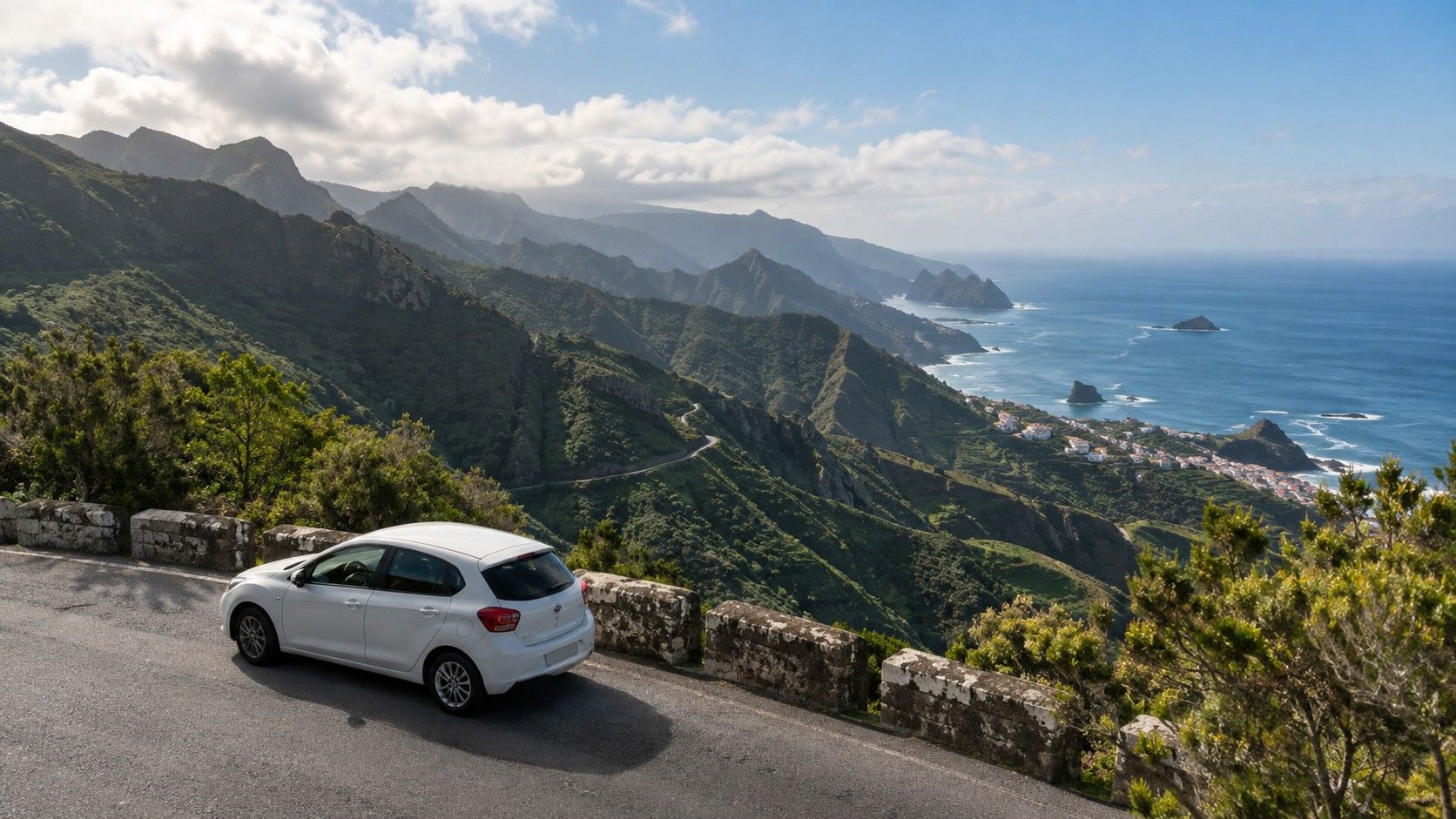
A Tenerife hike is only part of the day if you still need to navigate mountain roads, find parking or return to a coastal base. Leave a little water and food for the car, change out of damp socks if you can, and do not rush the first ten minutes of driving after a long descent. Tired legs and hot brakes are a bad combination on a winding road.
At the end, note what the route actually took: time, water, wind, shoes and the point where the group slowed. That small memory makes the next walk easier to choose. You do not need an ambitious list of trails to see Tenerife well. One route done with enough time, grip and judgment often gives more than a longer one completed by force.