With children, the best beaches in Tenerife are rarely the ones that look most dramatic in a photograph. The useful beach is the one where everyone can get from the car to the sand without a negotiation, find shade before somebody overheats, eat before the mood changes and leave without carrying a sleeping child across half a peninsula. I plan the whole day around those boring-sounding details. They are what make the sea, sand and holiday mood available in the first place.
Choose the beach by the whole day, not the colour of the water
Start with the practical shape of the outing. A beach near your accommodation may be better than a celebrated stretch reached after an hour in traffic, especially with younger children. Costa Adeje works for many families because services, promenades and food are close by, although its busiest areas can feel busy in exactly the way families sometimes hope to avoid. Playa de Las Teresitas offers a different kind of day, with broad sand and a more sheltered feel, but it needs a drive from the south.
Before leaving, I decide what the children need most: shallow water, room to dig, an easy toilet break, a café within walking distance, or simply a short return journey. Trying to get all five can make a simple beach day oddly complicated. A child who loves waves may have a fine time at a less sheltered beach; a toddler who is tired before lunch will care more about shade and a quick exit than the view.
Photos can hide the approach. Check whether the route from parking to sand includes steep steps, a long promenade or a road crossing with bags in hand. Tenerife beaches vary a lot in surface and layout. Sandals are good for sand, but a pair of shoes that can handle a hot pavement or uneven path saves a surprising amount of family irritation.
Make arrival easy before you think about the first swim
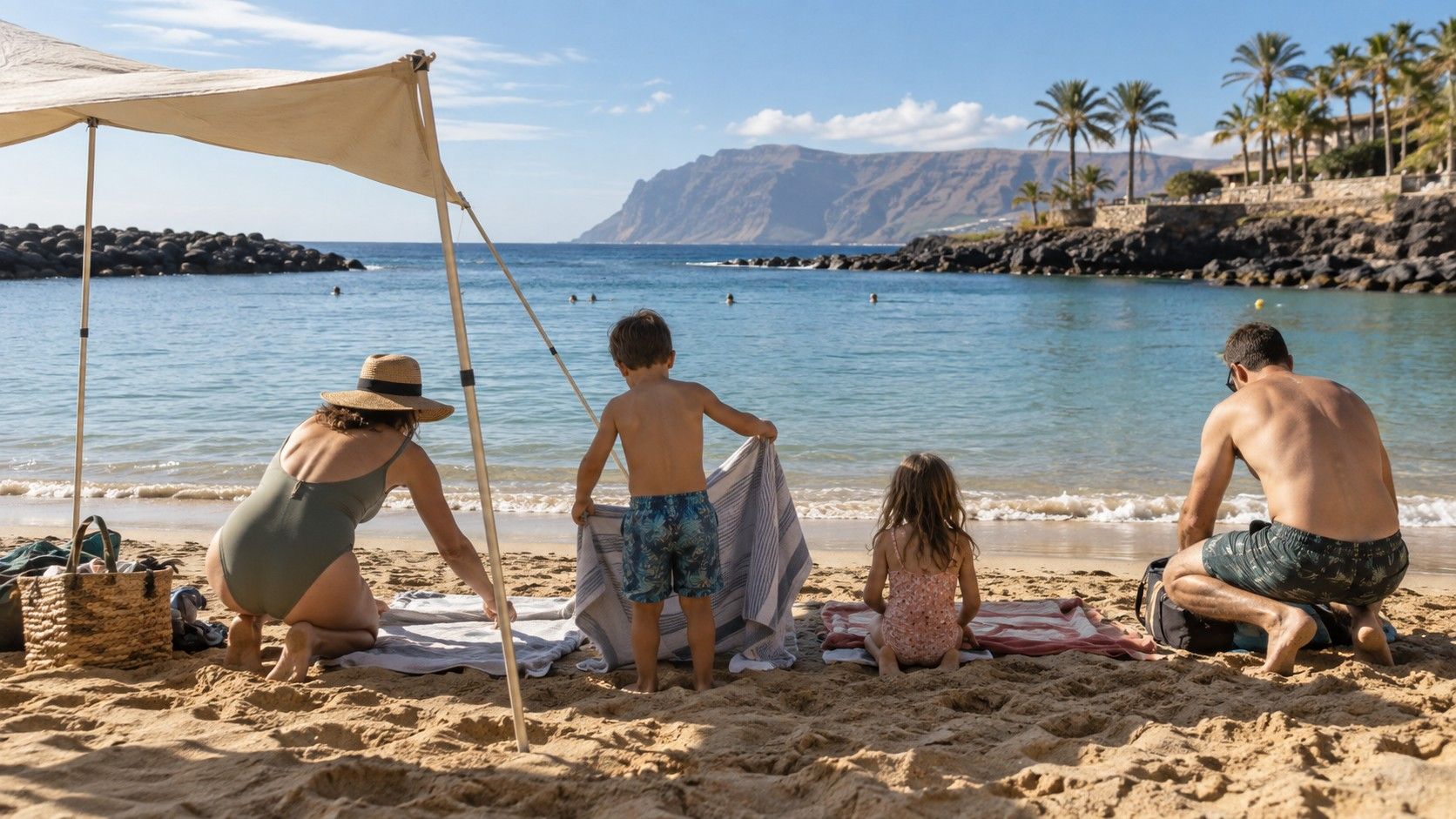
A relaxed start gives the day its best chance. I pack one bag for the first hour: water, sunscreen, hats, a small snack, swim gear and a light cover-up. Everything else can stay in the car until we know where we are sitting. This stops the familiar scene where adults unload the entire holiday while children drift toward the sea without hats or a clear boundary.
Shade should be considered before the sand gets hot. Natural shade may move or disappear, and a rented umbrella is not something I assume will be available at the exact moment it becomes urgent. Bringing a compact sun shelter or making an early choice of position gives you a base for breaks. It also gives a tired child a place to sit that is not a scorching car seat.
At the water, spend the first few minutes looking rather than rushing in. Watch where waves break, whether the entry drops away quickly and where other families are setting up. On a beach day, the sea decides more than the weather app does. A coloured flag, a lifeguard instruction or a sudden change in surf is enough reason to move the plan toward sand play, a promenade walk or lunch.
| Family priority | What to look for | Common catch |
|---|---|---|
| Easy swimming | Sheltered water, gradual entry and clear supervision points | Calm-looking water can still change with wind or swell |
| Low-stress logistics | Nearby toilets, shade options, food and a short walk from parking | Popular areas may be crowded by late morning |
| Space to play | Enough sand away from the waterline and a clear place to regroup | Wide beaches can mean a longer walk with bags and tired children |
Use shade and sunscreen as a schedule, not a rescue plan
The Tenerife sun has a way of feeling harmless early and then becoming very direct while everyone is absorbed in the water. I apply sunscreen before we arrive, then build a reapplication break into the day rather than announcing it after somebody is already red. A hat, a T-shirt or rash top and a patch of shade do more than a rushed layer of cream applied on wet sand.
Children often resist leaving the water when they are having the most fun, which is exactly when a snack and shade break helps. I use a simple rhythm: swim, dry off, drink, eat something small, then decide whether another swim still makes sense. This avoids the sharp turn from cheerful to exhausted that can happen during a long unbroken morning. Adults need the same break, even if they pretend otherwise.
Shade is also useful when the beach is windy. Sand moving across towels is more tiring for young children than it is for adults determined to have a perfect beach day. If a sheltered corner is not available, moving to a promenade café for an hour is a practical reset. The beach is still there later; nobody receives a medal for staying put through grit in their sandwiches.
Plan lunch before hunger makes the decision
Lunch is where an easy outing often becomes expensive and fraught. At a beach with a promenade or nearby cafés, I decide early whether we will eat out, bring a picnic, or do a mix of both. A packed snack takes the pressure off finding the first free table at the same moment everyone is hungry. It also helps when a child announces they want food halfway through the walk to a restaurant.
In Costa Adeje, the practical advantage is choice close to the shore; the trade-off can be crowds and a slower table at peak time. At Playa de Las Teresitas, a plan for water and a small lunch matters because the day feels more separate from town. I keep expectations modest: a meal does not need to be memorable to do its job. A calm sandwich in the shade can be more useful than a long restaurant wait with sandy feet.
Do not leave every drink in the car. A hot walk back for water is an avoidable mistake, and beach shops are not a reliable substitute for a family plan. I bring more than the first hour seems to require, plus something salty or familiar for a child who rejects the menu later. The aim is not to haul a camping expedition; it is to remove the one small problem that causes a large mood change.
Watch wind and water, not just the temperature
A warm forecast can disguise a beach that is unpleasant for children. Wind changes the feel of the sand, the temperature after swimming and the behaviour of the water. I look at the sea when we arrive and continue looking through the day. If conditions become choppy, we step back from the edge and let the outing become a sand-and-promenade day. That is a sensible adjustment, not a disappointment.
Keep children within the level of supervision the water actually requires, even on a busy family beach. Inflatable toys drift faster than expected, and a shallow entry can still have a stronger pull farther along the shore. Choose a recognisable meeting point and make sure older children can identify it. The simplest marker might be a lifeguard post or a fixed building rather than a towel that looks identical to fifty others.
I also leave a warm layer in the bag. After a long swim, a child can be cold despite a hot day, particularly if the wind picks up. A dry T-shirt and a drink often restore the mood faster than trying to persuade someone that the temperature is pleasant.
Leave while the day still feels good
Families often judge a beach day by how long they stayed. I judge it by the last half-hour. If the children are still content, lunch is done and the wind is rising, that can be the right moment to leave. Packing before everyone is hungry or sun-tired makes the return far easier than waiting for a dramatic collapse over one more swim.
Set up the exit from the beginning. Keep dry clothes accessible, know where the toilets are, and have a simple next stop in mind: an ice cream, a short drive, a shower at the accommodation. This gives children a transition instead of an abrupt end to the beach. It also prevents parents from attempting a complicated sightseeing detour with a car full of sand and sleeping passengers.
The best Tenerife beach day with children may be only three or four hours on the sand. That is enough for swimming, digging, lunch and a proper rest later. Pick the beach that makes that version easy, keep an eye on the wind, and give yourself permission to leave early. The day will feel far longer when nobody has had to endure it.