A week on Tenerife without a car can be relaxed, cheap enough to manage and much less complicated than people fear. It works when you stop trying to visit the entire island as if every road were a short promenade. I build the week around one base, walking days close to that base, a few bus trips that make geographical sense, and taxis for the awkward edges. The itinerary gets better the moment I remove the imaginary race between the north, the mountain and the south.
Choose the base before you choose the week
The base decides what car-free Tenerife feels like at breakfast and at the end of a long day. Los Cristianos and Las Américas put many holiday basics within walking distance: beaches, restaurants, shops and ferry-related activity. Costa Adeje can offer a similar south-coast rhythm, with different distances depending on the exact hotel. The useful detail is not the resort label but the walk from your door to food, a beach and a bus stop.
I would choose the south when the week is about coast time, predictable warmth and easy evenings on foot. It also makes it easier to use public transport for a planned city day or an organised excursion. Puerto de la Cruz suits travellers who prefer a north-coast town and can accept more changeable weather, but it shifts the natural range of day trips. Splitting a seven-night stay between two bases is possible, yet moving luggage often costs more energy than it saves.
Before booking, zoom in on the map and trace the actual route. A place described as being in Los Cristianos Las Américas may still involve a steep return from the seafront or a busy road crossing with children. Look for a supermarket, a bus stop and a reasonable evening walk. Those three things matter more than a promise that a famous attraction is only a few kilometres away.
Make the airport transfer the first practical decision
Decide how you will leave the airport before the flight lands. Tenerife airport taxis are useful when arrival is late, bags are awkward or the accommodation is not an easy walk from a bus stop. A taxi can be a sensible one-off expense that prevents the first evening becoming a navigation test. Use the official taxi rank and confirm the destination with the driver; keep the accommodation address available rather than relying on a vague hotel name.
A bus transfer can work well if you arrive in daylight, travel light and the connection lines up. The issue is not whether public buses exist; it is whether you want to begin the holiday with a wait, a change and a final uphill walk after a flight. I would not make a strict virtue out of the cheaper option. A taxi on arrival and a bus for later days is often the balanced choice.
| Transfer choice | Best when | What to allow for |
|---|---|---|
| Airport taxi | Late arrival, children, heavy luggage or accommodation away from the main road | Queue time, the exact pickup point and a clear address |
| Airport bus | Daytime arrival, light bags and a direct or simple connection | Timetable, possible changes and the final walk to the hotel |
| Pre-booked transfer | Group travel where you want a fixed meeting arrangement | Booking details, flight delays and where the driver will wait |
For the return, do not assume the outward route will feel equally easy at dawn. Check the final bus or arrange a taxi the day before, particularly for early flights. The last morning of a holiday is a poor time to discover that your large suitcase and a steep pavement were not part of the plan.
Keep bus days geographically tight
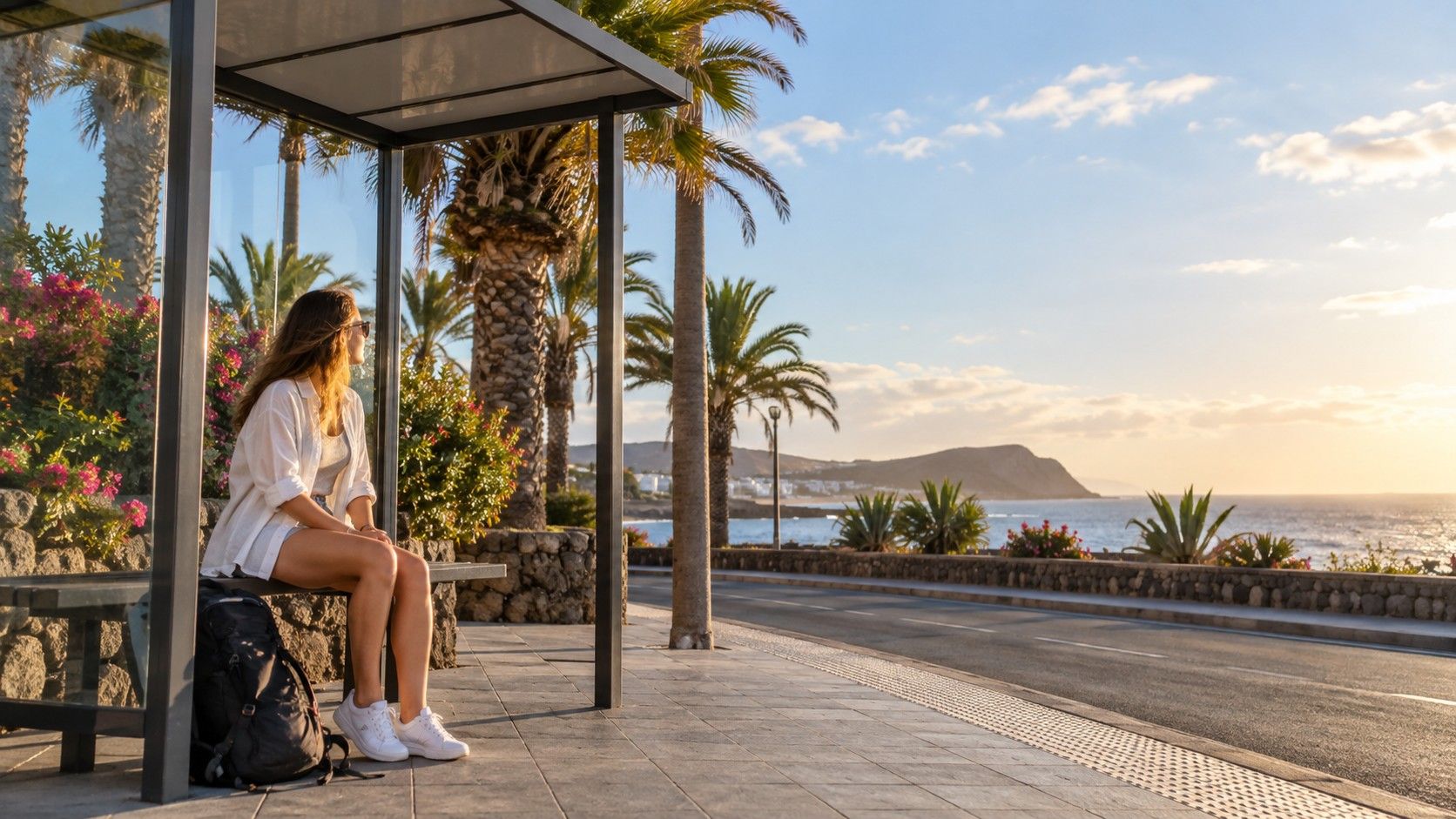
Public buses are useful when the day has one clear direction. From a south-coast base, make a city or nearby-town day rather than plotting three distant stops. From Puerto de la Cruz, use the north for its own pace. The bus journey itself can be part of the day, but it should not occupy every hour between breakfast and dinner. I look at the return options before leaving, because the last connection is more important than the optimistic first one.
A good car-free week alternates scale. One day stays close to the base: beach, promenade, lunch and an evening walk. The next might be a longer bus outing with a single main destination. Then come a quiet day with no timetable. This rhythm makes delays, cloud or a tired child easy to absorb. A daily long-distance schedule turns every missed bus into proof that the itinerary was too ambitious.
Check current route information close to travel, including weekends and holidays. Services can differ, and a route that appears direct on a generic map may need a change at a station. When boarding, have the destination written down or ready on your phone. It is a small courtesy that also reduces the chance of ending up on the correct island-facing road but the wrong branch of it.
Use taxis selectively rather than constantly
Taxis are most useful on the margins of a car-free itinerary: the airport, a late return from dinner, a short climb back to accommodation, or a point where a bus connection would consume an hour. They stop being good value when used as a substitute for every trip across Tenerife. That is when the question do you need a car in Tenerife changes from a transport preference into a budget calculation.
I set aside a small taxi budget before the week begins and spend it where it buys back time or comfort. A quick ride after a wet evening can be worthwhile; taking one merely because the next bus is twenty minutes away may not be. The aim is to protect the useful parts of public transport without forcing everyone to endure its least convenient moments.
For a group, compare the real door-to-door effort rather than only the fare. Two adults with children, bags and beach equipment may find a short taxi simpler than a bus plus a long walk. A solo traveller who likes to walk may make the opposite choice. Neither is morally better; the better option is the one that leaves the day feeling like a holiday.
Save the island-wide days for the right format
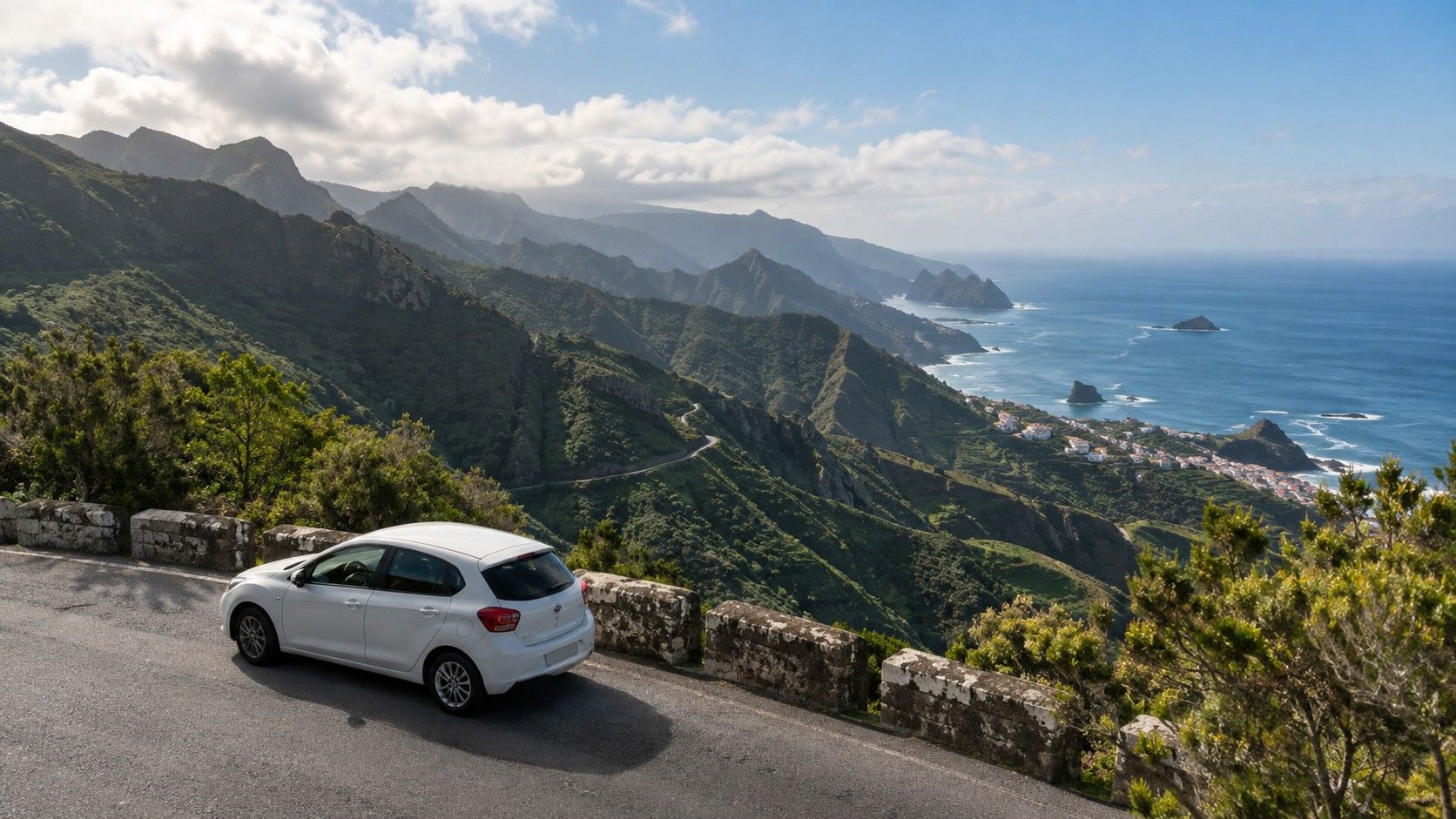
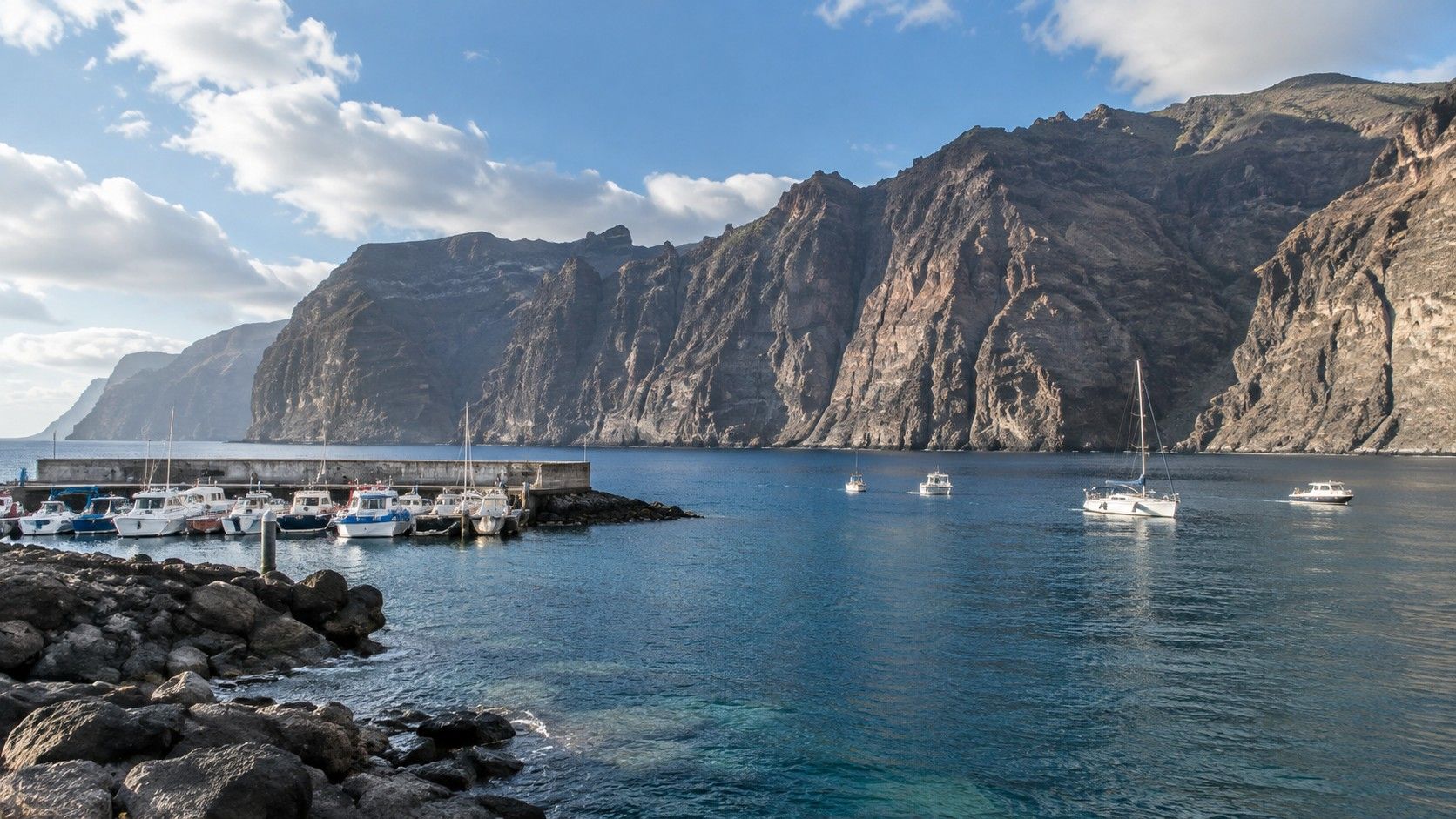
Teide National Park, Anaga Rural Park and a north-to-south loop are where a car-free plan needs restraint. They can be reached through organised excursions or careful transport combinations, but they are not casual add-ons. Mountain weather, long roads and fixed return times make them poor choices for a day already crowded with other wishes. If Teide is important, choose one dedicated excursion day and keep the evening free.
Some travellers will decide that a one-day rental car is worthwhile for a particular route. That is different from needing a car for the whole week. Others may prefer to leave the remote corners for another visit and enjoy the part of Tenerife their base makes easy. I have had better holidays with a modest radius and time to sit down than with a transport map full of achievements.
Build the final day close to accommodation. Keep it for a beach, a favourite breakfast, a promenade and luggage preparation rather than a distant trip that risks a stressful return. Tenerife without a car is at its best when the itinerary has breathing room: one base, a few chosen journeys and permission to change the plan when the weather or your energy says so.