A Teide day looks easy from a coastal hotel: point the car uphill, take a few photographs, come back for dinner. The mountain has a habit of turning that plan inside out. I treat it as a weather-and-energy decision first, then a sightseeing trip. A bright morning in Costa Adeje tells me very little about the road above Vilaflor, and a chilly car park near Mount Teide can feel much colder once the wind finds the gap around the door.
Read the mountain forecast, not the beach forecast
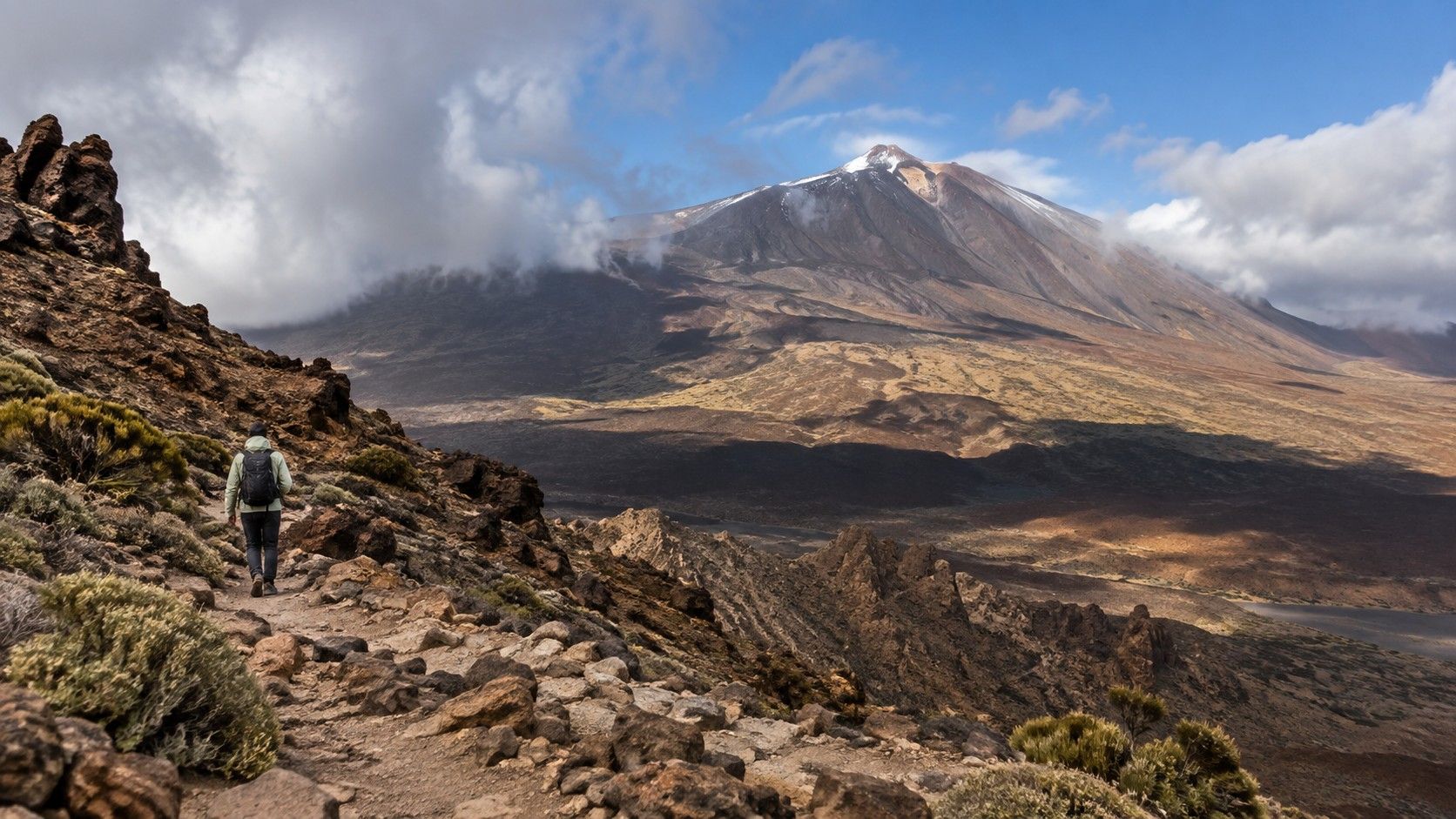
The useful question is not whether Tenerife will be sunny. It is whether the high road will be clear enough to make the drive worthwhile. Cloud can sit below the caldera while the park is hard and bright above it; on another day, mist and gusts arrive across the open lava fields even when Santa Cruz de Tenerife is warm. I check the forecast for the mountain area as close to departure as possible, then look out of the window again when the road begins to climb.
Temperature is the part visitors underestimate. The coast may invite sandals, while a stop at a viewpoint asks for a warm layer and closed shoes. Wind makes the difference more obvious than the number on an app. At a sheltered pull-off, a light jacket may stay in the boot. A few kilometres later, the same jacket is what lets you stand still long enough to see the landscape rather than rush back into the car.
Low cloud does not automatically cancel the day. If it is sitting lower down and the upper road is open, driving through it can lead to clear sky above the cloud layer. Dense fog at high elevation is a different proposition: visibility shrinks, the road loses its easy rhythm, and there is little sense in forcing every stop. My threshold is simple: if I am straining to see the next bend and the passengers are tense, the plan becomes a shorter mountain outing.
Choose one climb and leave room for the road
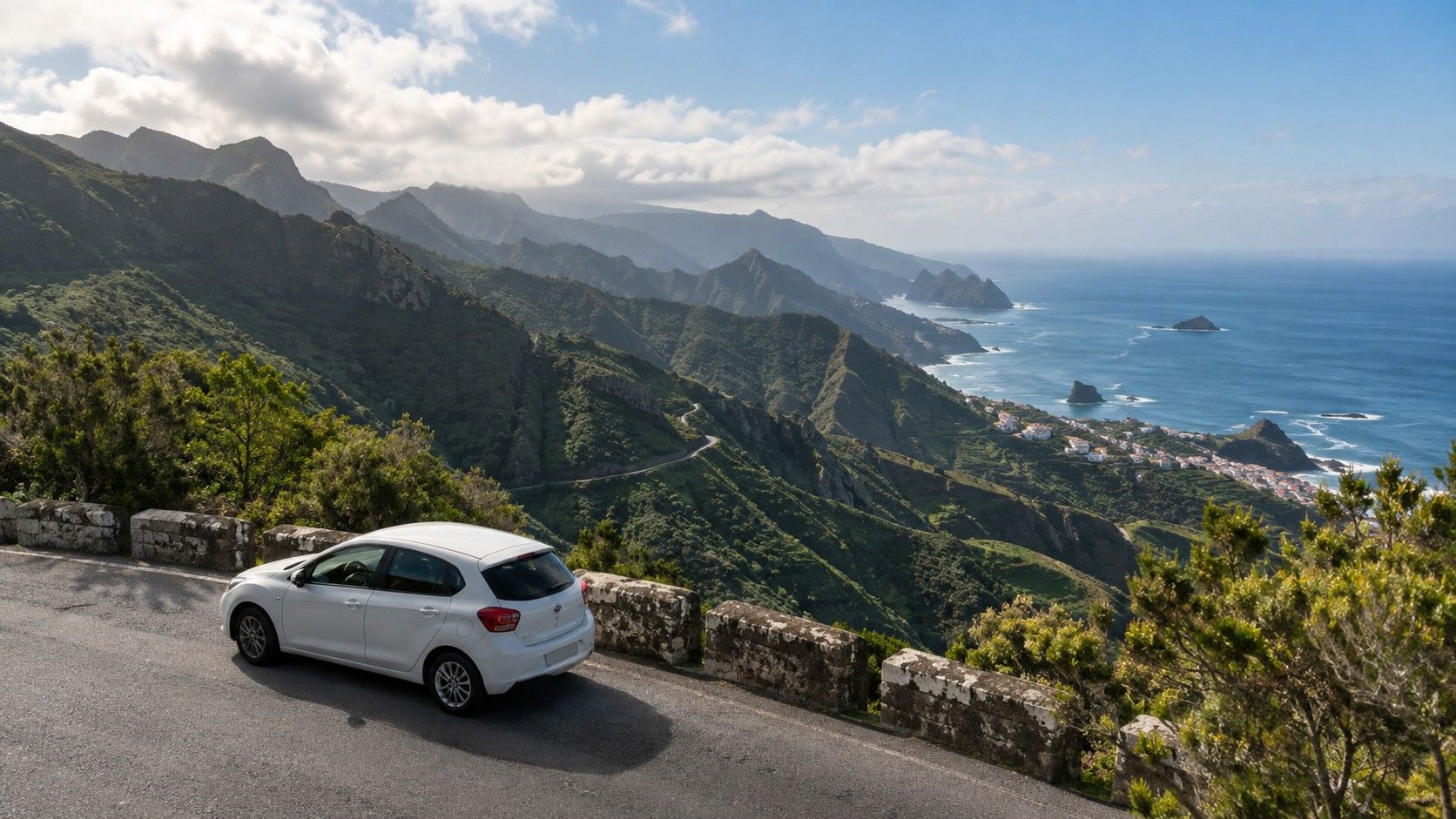
For a first visit, I would rather drive one coherent route than draw a large loop on a map and spend the whole day checking the clock. The southern approach through Vilaflor has a gradual build-up: pine forest, changing air, then the exposed plateau. It suits travellers based in the south and makes it easier to notice the altitude change. From the north, routes through La Orotava or La Esperanza can be just as rewarding, but each asks for time before the park even begins.
Mirador de La Tarta Tenerife is a sensible stop on the forested side of the journey, provided the weather gives it a view. The layered cut in the hillside explains its name better than a long caption could. I do not linger there simply because it is marked on a list. I stop if the light is decent, the pull-off is safe and nobody needs to be somewhere in ten minutes. That small rule prevents a day of compulsory photographs.
The mountain road is not difficult in the sense of a technical drive, but it is not an express route either. Hairpins, slower vehicles and photo stops make travel times elastic. Add an unhurried margin before booking a cable-car slot or a restaurant table far away. The most irritating Teide days are built on optimistic navigation estimates and then defended at every bend.
| Plan | What it gives you | What can spoil it |
|---|---|---|
| South coast to Teide and back | One main climb, Vilaflor forest, less pressure to race around the island | Cloud on the southern slope or a late start that leaves little time on the plateau |
| North coast to Teide and back | Different vegetation and a good fit for Puerto de la Cruz bases | Longer approach than it first appears, especially with traffic below the mountains |
| Cross-island route | Variety and a fuller sense of Tenerife's changing terrain | Too many hours driving if wind, fog or tired passengers slow the plan |
Dress for the car park, not the sunbed
I pack for several short exits from the car rather than for one long alpine hike. A warm top, water, sunscreen and sunglasses cover most ordinary Teide National Park days. Closed shoes are more useful than stylish ones once the ground becomes uneven volcanic grit. The sun at altitude is direct; people who skip sunscreen because the air feels cool tend to notice the mistake later, usually when a seatbelt touches their shoulder.
Wind changes how pleasant the exposed stops are, so I keep a lightweight windproof layer within reach instead of packing it under bags. A hat needs a way to stay on your head or it becomes litter with an expensive backstory. For children, a spare layer is more practical than a debate about whether they are cold. They often say no until they have been standing still for five minutes.
Altitude deserves a calm approach rather than drama. Walk slowly after arriving, drink water, and give anyone who feels unwell the option to sit in the car or move lower. There is no prize for reaching every marked rock. A mild headache or unusual fatigue can be a useful signal to shorten the stop, especially if the day has already included poor sleep, a long flight or a big breakfast followed by sharp bends.
Let viewpoints take the time they take
Viewpoints are where a Teide schedule usually comes unstuck. On a map, they are dots separated by a few minutes. In reality, one may have a full car park, another may deserve a slow walk to the edge, and a third may be swallowed by cloud. I choose two or three likely stops before leaving and treat the rest as optional. That gives the day a shape without turning it into a checklist.
Mirador de la Tarta Teide works best as part of the approach rather than the climax. The wider volcanic scenery higher up needs time as well, including the simple act of getting out of the car and letting your eyes adjust from dark forest to pale ground. If a viewpoint is crowded, I often wait five minutes in the car. Turnover can be faster than trying to squeeze into a bad space or walking along a road shoulder.
For each planned stop, I allow time for parking, walking, photographs, toilets if they are available, and the slow restart of a family group. Fifteen minutes means fifteen minutes, not fifteen minutes plus the things people forget to count. This sounds fussy until the last hour of daylight arrives and a scenic road becomes a task to get through.
Know when the short version is the better day
A shorter Teide trip is not a failure. If cloud blocks the high plateau, I would keep the forest section, take one clear viewpoint, have a simple lunch lower down and return without trying to salvage the original grand loop. The road through Vilaflor can still give the feeling of leaving the coast behind, and it does so without asking everyone to spend hours staring at a white wall.
The same applies when wind is strong or a passenger feels rough from altitude. Choose a lower stop, turn around at a safe place and keep the good parts of the drive. Mount Teide will still be there on a clearer day. Tenerife rewards repeatable plans more than heroic ones, particularly when rental-car insurance, daylight and patience are all finite.
My preferred rule for the return is to decide before the late-afternoon slump. If the route home is long, leave the upper park with enough light for slow traffic and one wrong turn. Do not wait for the perfect final photograph. A warm drink back on the coast feels better when the driver has not spent the last hour negotiating darkness, wind and a dashboard fuel warning.