Puerto de la Cruz is one of the easier Tenerife bases to enjoy without a car, as long as the holiday you imagine is mostly town, coast, cafés and a few deliberate excursions. It is not a substitute for having wheels on every part of the island. I like the fact that I can put the car keys away here; I like less the moment someone decides that Teide, a remote beach and a south-coast dinner all belong in the same day. The town rewards a smaller, more realistic plan.
What actually works on foot
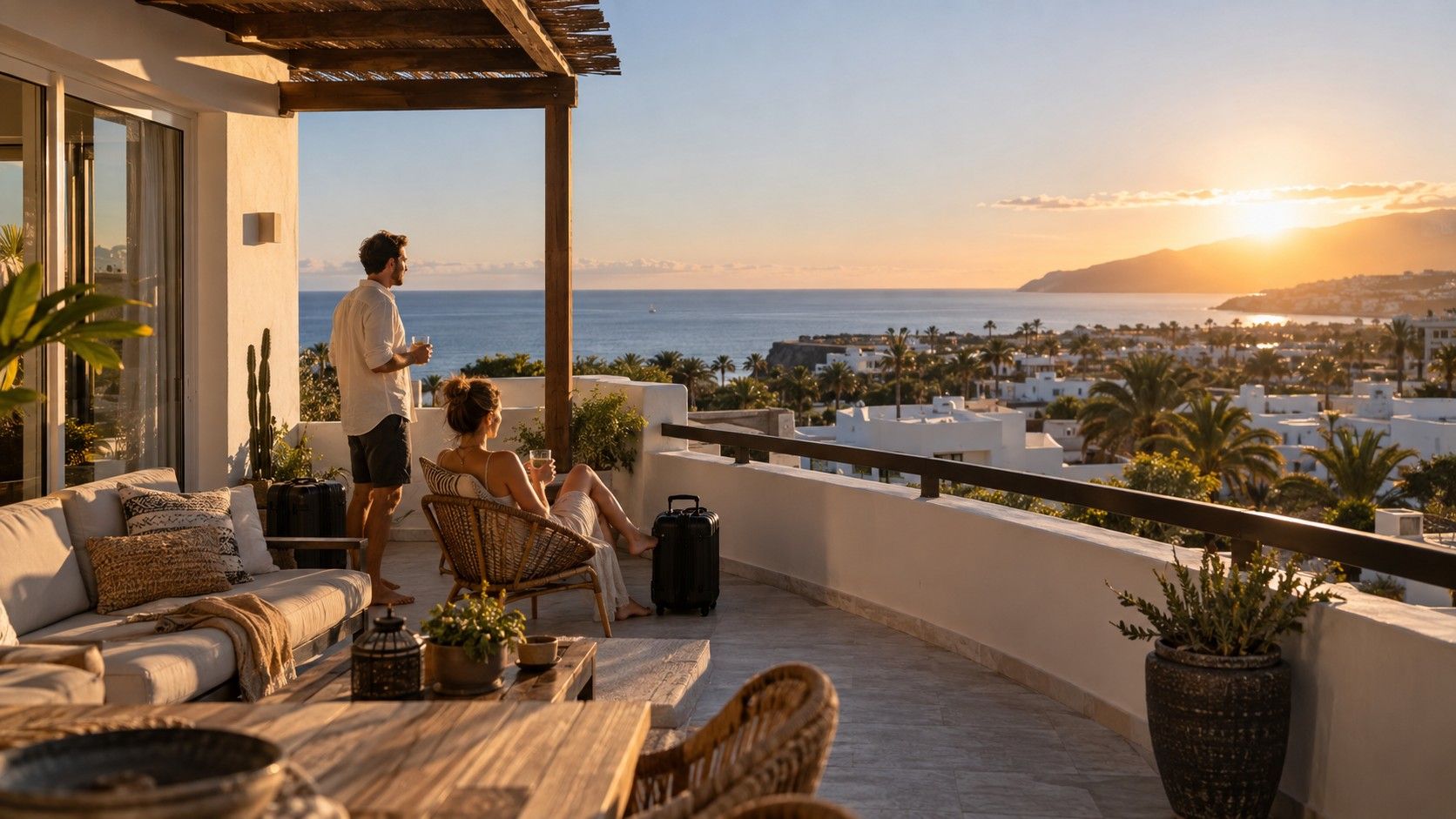
Central Puerto de la Cruz is compact enough that walking solves the ordinary parts of a holiday. The seafront, the older streets, shops and many places to eat sit close together, though the terrain is not flat everywhere. A hotel on a hill can make a ten-minute map distance feel longer in midday heat or after a big dinner. I check the exact walk from accommodation to the centre rather than trusting the district name on a booking page.
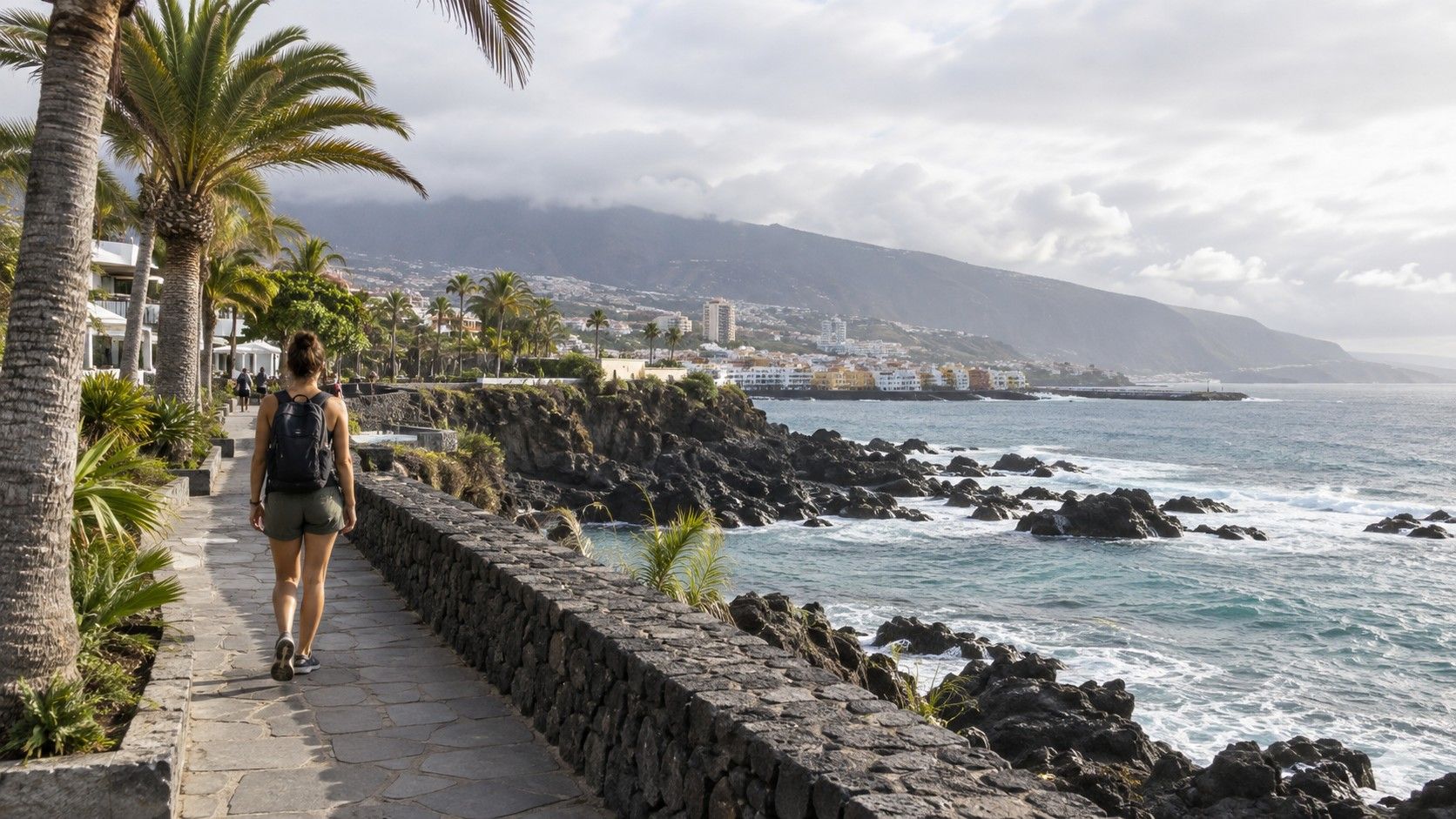
Lago Martiánez gives the western side of town a clear focal point, and the promenade connects several useful parts of the coast. For an unplanned afternoon, that matters. You can wander, stop for a coffee, change your mind about swimming when the sea looks rough, then walk back without negotiating a car park. The black-sand and rocky shoreline is interesting to look at, but it is not always a calm, easy beach day.
Walking is most comfortable when you stay close to the centre or accept taxis for the uphill return. I have seen travellers book a scenic edge-of-town apartment, then spend the week timing buses for a simple meal. That can still suit a quiet stay, but it is a different kind of car-free holiday. The useful test is whether you would happily walk the route twice in ordinary shoes, with a shopping bag and a little rain.
Use buses for a few clear day trips, not an island-wide challenge
Public transport makes sense from Puerto de la Cruz when the destination has a straightforward connection and you are willing to let the timetable set the pace. The Orotava Valley is nearby, and La Orotava itself is a reasonable outing without the drama of a long transfer. Santa Cruz de Tenerife can work for a city day, especially if you are content to leave early and return after one main activity rather than trying to add Anaga on the same ticket.
The trade-off is flexibility. A bus day has a beginning and an end that are not yours to move around. If a viewpoint is covered in cloud, a rental car lets you turn off or head lower; a bus may ask you to wait, retrace your route or simply accept the weather. I enjoy that constraint on a slow day, but I would not use it for an itinerary built around changing mountain conditions.
| Without a car | Usually straightforward | Where patience is needed |
|---|---|---|
| Within Puerto de la Cruz | Promenade, Lago Martiánez, meals and central shopping on foot | Uphill accommodation, heavy bags and wet evenings |
| Nearby north-coast outing | La Orotava or a planned bus trip with one destination | Timetables and less freedom to stop when the weather shifts |
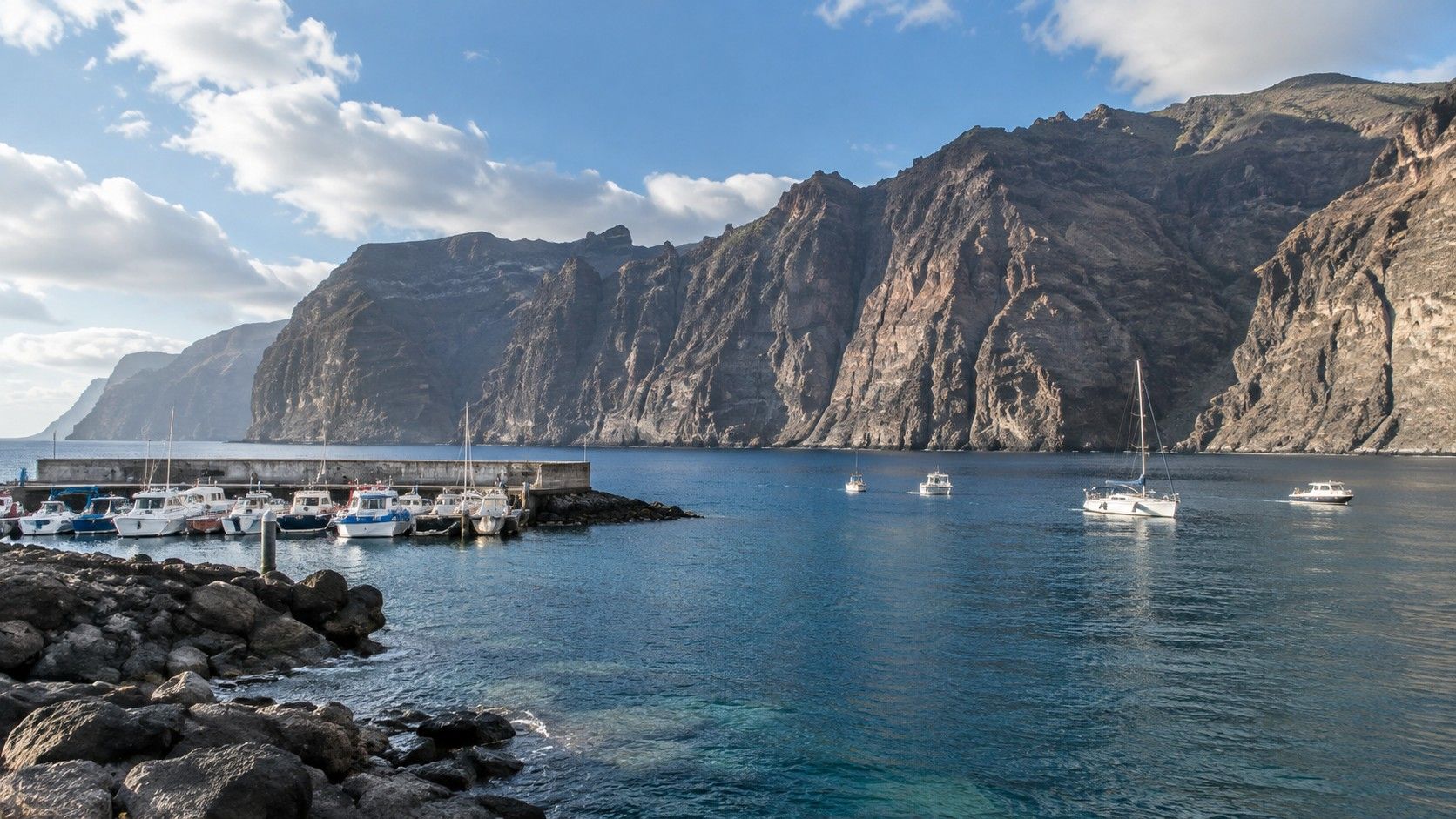
| Big island day | Organised excursion or a single long public-transport route | Teide, Anaga and the south coast become much longer than they look |
I would check the current timetable directly before committing to any long route, because service patterns can change and a public holiday can alter the useful options. More important than the printed journey time is the total day: walk to the stop, wait, change, find lunch, and make the return before everyone becomes tired. Those small pieces explain why a car-free day can be lovely in the town and cumbersome beyond it.
Where hiring a car begins to pay for itself
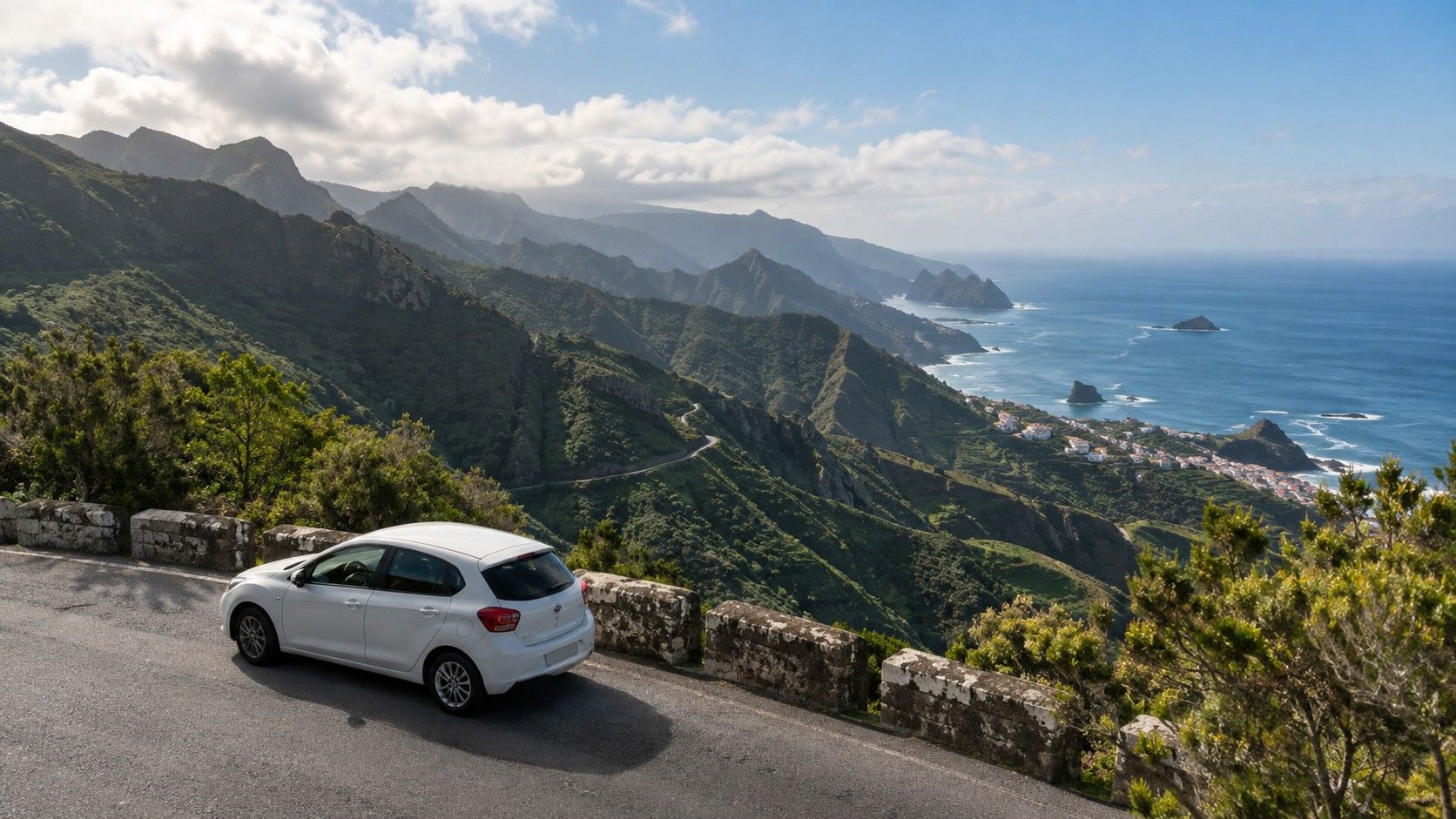
The question do I need a car in Tenerife has no single answer, but Puerto de la Cruz makes the division quite clear. You do not need one for the daily life of the town. It becomes valuable if your list includes Teide National Park, several north-coast villages, a flexible weather day, or repeated trips beyond the bus corridors. A car is also useful when travelling with children, beach gear or anyone who finds a long wait at a stop more tiring than a mountain road.
I would not rent a car for the whole stay automatically. A few car-free days in Puerto de la Cruz followed by one or two selected rental days can be a better balance. It avoids paying to park a vehicle while you stroll to breakfast, and it gives the driving days a proper purpose. The caveat is availability and collection times: if the only suitable rental desk is far away, the supposedly simple one-day plan needs a little more thought.
Parking in town can make a car feel less useful than it sounded online. Before booking accommodation, ask whether there is a practical parking arrangement or whether you will be circling after dinner. The town's walkability is its advantage; there is little sense in introducing a daily parking problem merely because the island has tempting roads.
Build rainy mornings into the rhythm of the north coast
The north coast has a different mood from the sunnier south. A cloudy or rainy morning in Puerto de la Cruz is not necessarily a ruined holiday; it can clear later, and the greenery around the Orotava Valley has a lot to do with that weather. Still, it changes what feels easy without a car. A promenade walk with an umbrella is manageable. A long bus connection to a beach you may not use is less appealing.
I keep one low-effort indoor or town-based option for those mornings: a late breakfast, an unhurried market browse, a museum visit if it fits the day, or simply waiting to see whether the cloud lifts. This is not glamorous planning, but it stops a wet forecast becoming an argument over transport. By lunchtime, the coast may look different; if it does not, Puerto de la Cruz has enough close at hand to avoid treating the day as lost.
Wind also matters along the promenade and swimming areas. The air can feel mild while the sea looks emphatic. I do not promise a beach hour just because it is on the schedule. In a car-free base, the useful response is to walk to a sheltered café, watch conditions for a while, and move the swimming plan rather than spend money and time chasing a better patch of coast.
Who will enjoy this base most
Puerto de la Cruz without a car suits travellers who enjoy a lived-in town more than a resort compound, who are happy to walk and who can choose a few outings rather than demand every corner of Tenerife. Couples, solo visitors and families with older children often have enough within reach to keep the days varied. The town has texture on an ordinary morning, which helps when there is no vehicle waiting to create an activity.
It is a weaker fit for people whose holiday depends on a different beach every day, remote hikes at first light, or spontaneous changes between the north and south. Those plans are possible, but buses turn them into projects. A south-coast base or a rental car may be the calmer choice. There is no virtue in proving you can travel without a car when the transport plan has become the main event.
My version of the stay would be simple: walk the town for the first couple of days, use one planned bus excursion, then rent a car only if the weather and energy make a longer route worthwhile. Puerto de la Cruz is at its best when you let the promenade, the north-coast light and the slower pace do some of the work. The trade-off is real, but so is the relief of ending the evening on foot instead of hunting for a parking space.