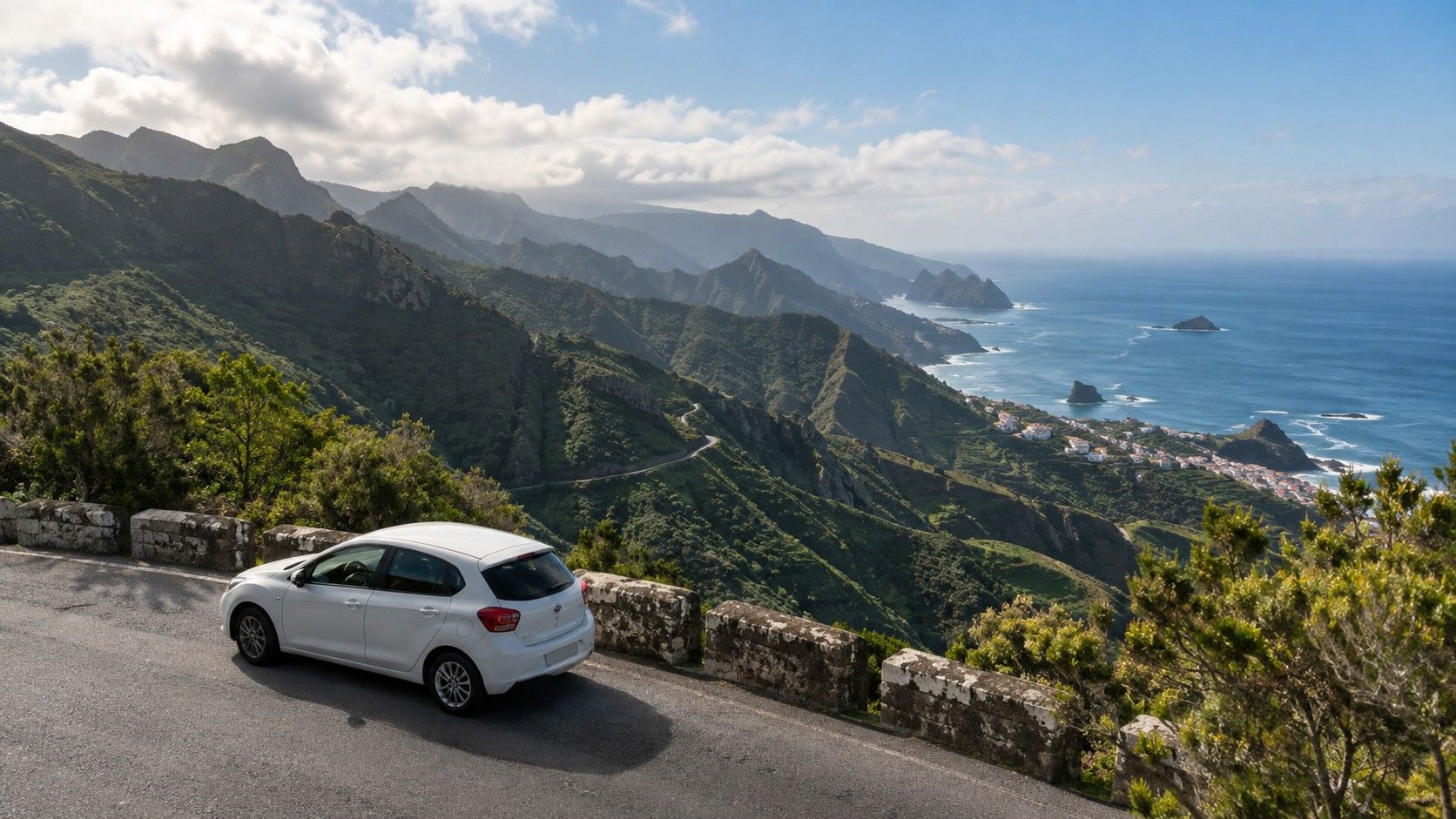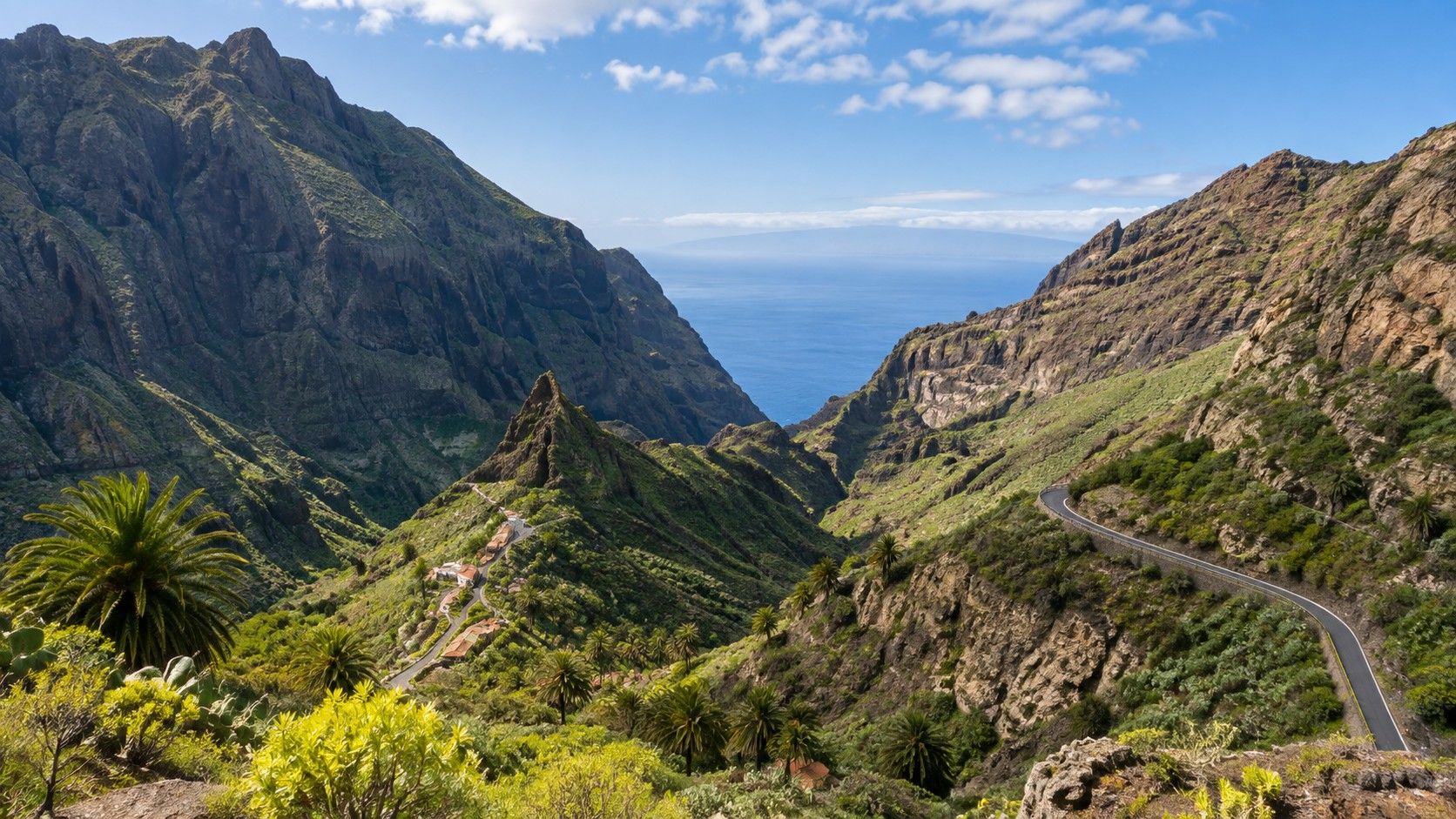
Masca is one of those places that gets put on every Tenerife list and then quietly consumes much more of the day than expected. The village is small; getting there, finding a sensible place to leave the car, looking down the valley and coming back without feeling wrung out are the real job. I treat it as the day’s main event, not as a quick stop between three pins on a map.
Make Masca the centre of the day, not a detour
The mistake starts with a route that says Masca at 11, Garachico at lunch, Teide at four, and a beach sunset somewhere after that. On a map, the distances look modest. In Teno Rural Park the road does not behave like a straight line, and every pause has a way of becoming longer: a lookout, a slow coach, a driver negotiating a bend with both hands on the wheel.
For travellers looking at places to visit in Tenerife by car, Masca works best when the rest of the plan has room to breathe. Leave the south or Puerto de la Cruz early enough that the first part of the drive feels ordinary, then accept that the final approach is the experience. The terrain changes from familiar resort roads to ridges and folds, and the last kilometres ask for attention. It is much more satisfying to arrive with time for coffee and a proper look around than to step out already checking the clock.
I would allow a generous block for the village itself, even without a major hike. The lanes are steep, the views keep interrupting progress, and the difference between shade and sun can be dramatic. A person who moves comfortably on level promenades may find an hour in Masca quite active. That is not a criticism; it is the reason a short visit can still feel substantial.
Choose the direction before you get behind the wheel
There are two broad ways to build the road section. One is to approach from the Santiago del Teide side, descend towards Masca, and later continue towards Buenavista del Norte if conditions and confidence are good. The other is to come from the north-west, climb through the Teno side, visit Masca, then return the way you came. Neither is automatically superior. The useful choice depends on who is driving and whether the passengers enjoy exposure.
The Santiago del Teide approach is often the easier psychological start for people based in the south. It gives the driver a little time to settle into the mountain rhythm before the tighter bends. Going downhill towards Masca can still feel intense because the road reveals the drop-offs gradually. I would not choose it for a first mountain drive in rain, low cloud, or a rental car full of people who get carsick. A confident driver is more valuable than an ambitious itinerary here.
The Buenavista side gives a different kind of day: more rural, more gradual in its build-up, and potentially useful if you want to continue along the north coast afterwards. It also makes you commit to more mountain driving before the village. Check road notices on the day rather than assuming the route is open because it appeared in an old travel video. Teno roads can be affected by weather, maintenance, or traffic arrangements, and a closed section changes the whole sequence.
| Route idea | Best for | What to watch |
|---|---|---|
| Santiago del Teide to Masca | South-based visitors who want a direct morning approach | Tight downhill bends and passengers who dislike exposed roads |
| Buenavista del Norte to Masca | Travellers combining the village with the north-west coast | Longer mountain concentration before the stop |
| Return the way you arrived | Anyone whose road confidence is limited | Less variety, but fewer route decisions late in the day |
| Continue through Teno | Drivers with time, clear conditions and steady nerves | Road status, fading light and the temptation to rush |
Navigation is useful for the broad route, but it cannot tell you whether a passenger has stopped enjoying the scenery or whether the next bend needs a pause. Keep the fuel level sensible before entering the mountains, carry water, and avoid treating every lay-by as a parking bay. The road is narrow enough that a poorly placed stop changes the day for people behind you.
Put parking into the timetable rather than hoping for it
Masca is not built for a casual parade of hire cars. Space around the village is limited, arrivals cluster at similar times, and the narrow streets give very little room for correcting a bad decision. If you arrive in the middle of the busiest part of the day, the search for parking can turn a peaceful mountain visit into a tense loop with no obvious place to turn around.
An early arrival is less about winning a perfect space than about removing pressure. You can park where permitted, walk the short distance without irritation, and start noticing the village before the road has filled with engines and door slams. If your accommodation serves breakfast late, take something simple with you and eat after the drive. That small change is often kinder to the driver than trying to depart after the general resort rush.
Do not leave valuables visible, but the larger issue is safety and access. Follow signs, use marked areas, and do not squeeze onto a shoulder because another car has done so. Emergency access and ordinary local traffic matter more than a visitor’s photo schedule. If the available parking does not work, the grown-up answer may be to move on and return at another time rather than improvising in a bend.
It also helps to agree in advance how the group handles the stop. One person can go ahead to look for the permitted area while the driver stays calm and keeps the vehicle moving only where it is safe. That is better than four people shouting competing suggestions from phone screens. Masca rewards a slower pace; it does not reward a small family argument in a rented Fiat.
Decide whether you are visiting the village or taking on a walk
There is a persistent tendency to describe Masca as a single activity. It is not. A village visit means uneven lanes, viewpoints, a drink, and enough walking to feel the slopes. A serious route in the valley is a different commitment, with its own access rules, fitness demands, timing and return logistics. Mixing the two in one vague plan is how people leave underprepared or disappointed.
If your aim is to see Masca, keep the walking modest and wear shoes that can cope with stone, steps and dust. Sandals may be fine for a harbour afternoon; they are less convincing once a steep lane is involved. Sun protection, water and a light layer are ordinary but useful because the valley’s shade and exposed viewpoints can alternate quickly. Give older relatives or young children permission to turn back from a steep section without making it a failed day.
If you intend a demanding walk, confirm the current official arrangements before leaving. Access to routes, permits, boat connections and weather restrictions can change, and it is not wise to rely on a blog post written several seasons ago. Build the day around the walk, not around a restaurant reservation somewhere far away. The return is the part people underestimate: tired legs, a different temperature, a queue, and a long drive are a poor combination.
I have found that the village-only version is often the better choice for a first visit. You still see why the valley has such a strong reputation, but you have attention left for the road and for the small details: terraces clinging to slopes, the way voices carry in the lanes, the sudden appearance of palms below hard volcanic rock. The day feels complete without turning into an endurance test.
Use viewpoints selectively instead of collecting every one
The urge to stop at every signed viewpoint is understandable, especially when Tenerife what to do and see searches have supplied a long list of dramatic photographs. In practice, several stops can offer a similar sweep of ridges, and repeated pull-ins make the driving more tiring. Pick a couple with safe access, then let the changing road provide the rest of the scenery from the passenger seat.
At the village, the best view is not always the first crowded platform. Walk a little, look back after a turn, and notice where the light sits on the terraces. Midday can flatten the scene, while earlier or later light gives more shape to the valley. That does not mean chasing a perfect photograph until everyone is cold and hungry. It means allowing the place a few quiet minutes after the initial arrival.
Keep an eye on the sky. Cloud can arrive around the high ground and make the road feel narrower than it did in bright weather. When visibility drops, reduce the plan rather than pressing on for one more lookout. Mountain landscapes do not owe us a postcard at a scheduled time, and there is no prize for returning to the hotel with a full memory card and frayed nerves.
Let the return route become the gentler half of the day
After Masca, most people need food, a flat chair and fewer decisions. That is why I prefer pairing it with one nearby stop rather than trying to sweep the whole island. Buenavista del Norte can work as a practical reset if you are continuing north-west: it has a more lived-in feel, easier streets, and a useful contrast to the concentrated drama of the mountains. If you came from the south and are returning that way, Santiago del Teide or a simple coastal meal on the west side may be enough.
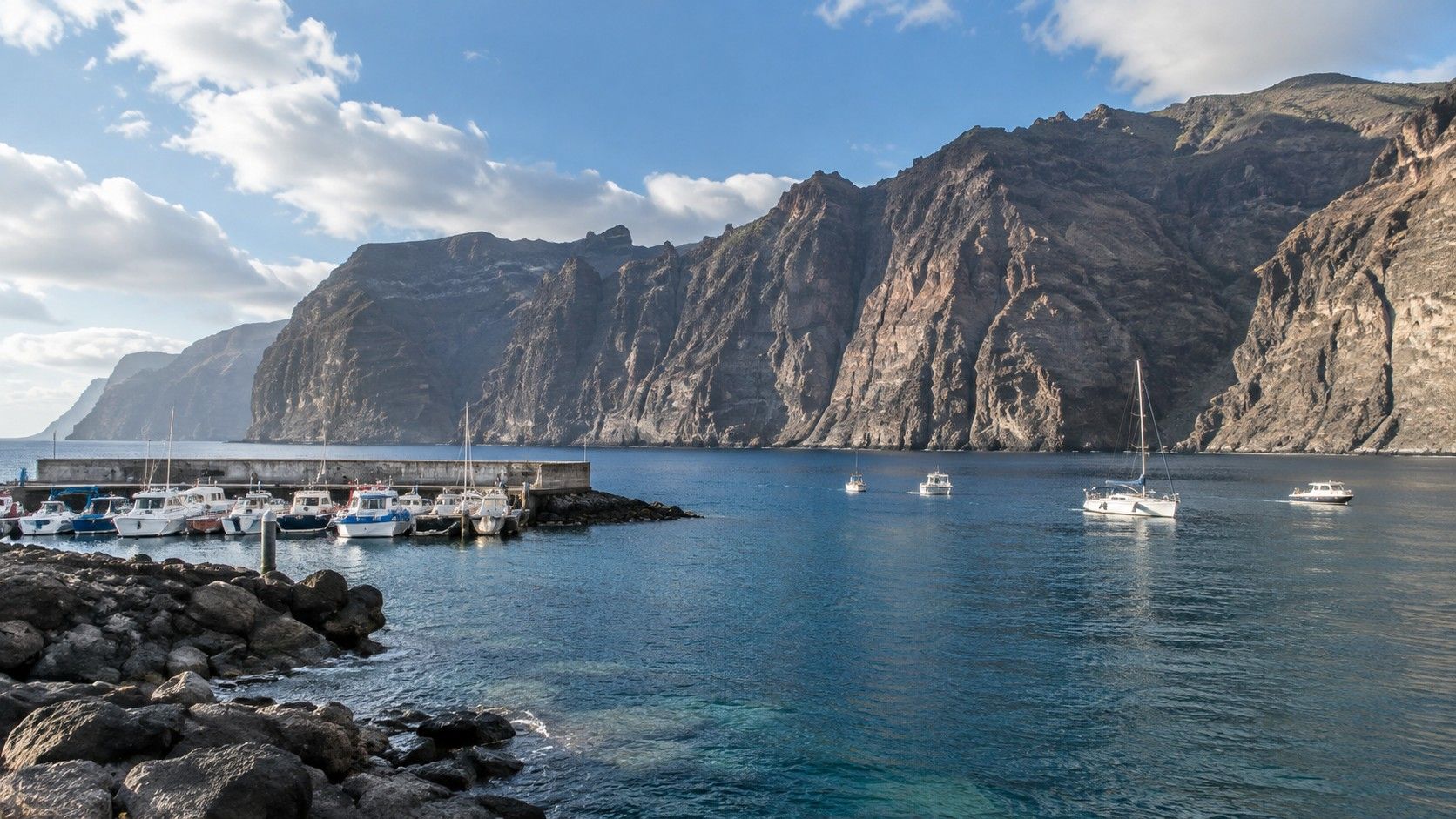
Los Gigantes is sometimes added to the same day because it looks close on a map. It can work only if Masca has stayed deliberately short and the driver still has energy. Otherwise, save the cliffs for their own afternoon. The same applies to Teide: the island’s routes are compact in distance but not in effort. One strong landscape is better remembered than three seen through a windscreen.
Plan the final stretch before sunset, especially in seasons when dusk catches the mountain road sooner than expected. Use a proper break before driving on; water and something savoury are more useful than another coffee if the group has been out in the sun. When you reach a wider road again, the relief is noticeable. That is a good moment to stop chasing the itinerary and call the day finished.
Masca works when it is allowed to set the pace. Start early, choose a route that fits the actual driver, respect the parking limits, and separate a village visit from a hard walk. The result is not a heroic checklist. It is a day with enough space to notice where you are, and enough margin to get home in a good mood.